Latest Entries »

ptsd triggersKind of tongue in cheek title, but with all do seriousness, I made it that way in an effort to make you think. PTSD symptoms do not happen in a vacuum. They might fade, disappear for a time but they never truly go ‘away’ forever. Think of it this way, the brain is like computer with a CD Rom that is always recording what is going on. When a traumatic event happens that too gets burned onto the CD. A trigger is like a command prompt or a file connected to the original event which then gets replayed. Or more simply put, a trigger is like pushing the on button unintentionally.
The best way I can describe how a trigger works in the real world is lets say as a child, said child (now adult) was abused. One very bad beating occurred because they wouldn’t eat green beans or even the broccoli or it could be the beating occurred just after eating it. In this child’s mind, the beating becomes associated with the broccoli. In adulthood, the abused child may avoid eating anything green or even something that looks like the broccoli. This is called avoidance. However, one time, the adult attends a dinner meeting in which the menu is preplanned and guess what is on the plate that is put in front of him? Broccoli. The adult then abruptly becomes very upset and seeks away out of the meeting (avoidance) in order to protect themselves when just seconds before they were laughing and enjoying themselves. Broccoli is the trigger that makes the adult remember the pain of the beating, the feelings of helplessness of not being able to stop the beating or get away.
Lets say a combat veteran or first responder hits a deer driving home and the deer is mangled, and when checking on the car/deer they smell the blood and see the mangled deer. The smell of blood alone could be a trigger into anxiety, anger or some other PTSD symptom. Seeing the mangled body of the deer could trigger memories of seeing someone who was seriously injured or killed which in turn releases all the original trauma memories and symptoms of PTSD occur.

In other instances, such as in finding a loved one or close friend who committed suicide may find PTSD symptoms triggered when they are home alone or find a picture of them accidentally. An domestic violence survivor may ‘freak out’ (PTSD) if she gets into an argument (trigger) with a new partner. A runner who just ran his best time may experience a racing heart if he doesn’t cool down properly, which in turn ‘triggers’ PTSD symptoms. Like I said, its not about the broccoli. Triggers are internal and external ‘cues’ that takes someone back to the original trauma and cause symptoms of PTSD in that moment…out of the blue so to speak.

PTSD triggers may be all around you or your loved one. And typically they fall into two categories. Internal Triggers and External Triggers. Internal triggers are things that you feel or experience inside your body. Internal triggers include thoughts or memories, emotions, and bodily sensations (for example, your heart racing). External triggers are situations, people, or places that you might encounter throughout your day (or things that happen outside your body). Listed below are some common internal and external triggers.
• Internal Triggers
o Anger
o Anxiety
o Sadness
o Memories
o Feeling lonely
o Feeling abandoned
o Frustration
o Feeling out of control
o Feeling vulnerable
o Racing heart beat
o Pain
o Muscle tension
• External Triggers
o An argument
o Seeing a news article that reminds you of your traumatic event
o Watching a movie or television show that reminds you of your traumatic event
o Seeing a car accident
o Certain smells
o The end of a relationship
o An anniversary
o Holidays
o A specific place
o Seeing someone who reminds you of a person connected to your traumatic event

So we see, its not about what is happening RIGHT NOW its about what happened during the traumatic event. But in daily life we can only employ avoidance strategies so long and many times we cannot avoid what may trigger symptoms of PTSD to reoccur. So the question becomes, if we can’t avoid triggers entirely then how do we live without being reactive and in a constant state of PTSD?
Identification of Triggers
An important note on increasing your awareness of triggers: while it is important to do so, be aware that doing so may cause you distress and to be uncomfortable. Some people might actually become triggered by trying to identify their triggers. Before taking steps to identify your triggers please be sure to let someone know what you are doing and have support available to you just incase you are triggered. Never try to push yourself too far. A little at time is all it takes.

The first step to avoid being side swiped by a trigger is to try and identify what your triggers are. When you are in a good place, think about when your PTSD symptoms usually come up. To identify your triggers ask yourself these types of questions: What types of situations are you in? What is happening around you? What kind of emotions are you feeling? What thoughts are you experiencing? What does your body feel like? Get a notebook and write down as many internal and external triggers as you can. Sometimes it can be hard for those with PTSD to identify their own triggers, so you may even want to ask your family and friends about what they believe or see your triggers are.
How to Cope with Your Triggers
Of course the best way of coping with triggers is to avoid them altogether. However, this is almost impossible to do. Why? Well, you cannot really avoid your thoughts, emotions, and bodily sensations. Much of these are out of our control. In regard to external triggers, we can take some steps to manage our environment (for example, not going to certain places that we know will trigger us), but we cannot control everything that happens to us. For example, you might inadvertently come into contact with a news story or conversation that reminds you of your traumatic event.
Because we often cannot avoid triggers, it is important to learn ways of coping with triggers. After we figure out what the triggers are we are then free to ‘make a plan’ to effectively handle the symptoms of PTSD. Some effective and healthy coping strategies for lessening the impact of triggers include:
• Mindfulness- being in the moment
• Relaxation techniques
• Self-soothing techniques
• Grounding yourself
• Expressive writing (journaling)
• Social support
• Deep breathing
The more strategies you have the better off you will be in managing your triggers and the less likely you will turn to unhealthy coping strategies such as drugs, alcohol and isolating. Simply being more aware of what can trigger you can be of great help to you because you will have gained more awareness and thus, be more able to cope better. Awareness of your triggers allows you to begin to feel more in control and gives rise to better understanding of your emotional reactions which in turn validates them (understanding why) and allows predictability all of which can definitely impact your mood and well-being. More on coping strategies to come.

Stay safe and be prepared!
Survivingshtfmom

http://ptsd.about.com/od/selfhelp/a/CopingTriggers.htm

shelter in placeOkay, so you have come to the conclusion that it would be a very smart idea to get some supplies together. But where to start? Below is just a jump start to get you going. Your personal circumstances will dictate what you can and cannot do.

Just think this way: if you knew a hurricane or blizzard was coming what would you get from the store? And then make sure you get enough for at LEAST one month if not three months (which is where I would personally be most comfortable starting from nothing). Tess Pennington has a great resource for what to buy if you can do so. But there are a lot of options including 30 day buckets made by various emergency preparedness companies that range from $60 to over $200 per person. Keep in mind these bucket NEED WATER and some way of cooking/heating.

Short term food supply

Long term food supply

Both of the links above will take you to Ready Nutrition

For those on a tight budget facing potential mandatory lockdown (or voluntary if you are smart in live in a high risk area) you can subsist on peanut butter, crackers, tuna, and other canned foods that can be bought cheaply. This is something only you can decide on since YOU know your circumstances. But lay in your food storage now before real fear sets in. Remember your pet too. Do what you can with what you can when purchasing your food items. And buy only what you WILL EAT.

Do you have a way of cooking outside of the microwave or your stove? Do you have enough ‘fuel’ to last and sit out in isolation for a few weeks to possibly months? And the biggest question, is do you know how to use that alternative cooking method. If you answer no to any of these questions then now is the time to either get one you can work (NO CAMPING STOVES INSIDE THE HOUSE!!!) and make sure you know how to use it now and have enough fuel on hand for daily use for at least a month. Personally if I lived in a city or other highly populated area I would go for minimal cooking. Less noticeable.

Do you have water? We use so much water in our daily lives to do so many things…cooking, cleaning, washing. The school of thought is 1 gallon minimum per day per person/animal. Frankly, I like to get 3 gallons going per person just to have extra. I learned this after going through Irene with no power for a week. Water is KING. Yes, right now you have electricity and the water is flowing…but the idea is not to wait for it to stop flowing before being ready for it not be flowing.

First Aid items. What is in YOUR house? The last place you want to be going in case of an outbreak or potential one is the doctors office, ER or Urgent Care especially if you can take care of it at home yourself. Most coughs, sniffles, bumps and bruises and other things can safely be handled at home. If you are sure, get a good home first aid book to walk you through things. But remember, have the little things ON HAND. There is no going out remember? Not unless you absolutely have to do so. Isolation is the only sure fire method of prevention. Again, Tess Pennington has a great ‘get you started list’.

First Layer of First Aid

More First Aid

Medications that you take regularly. Is that prescription filled? Keep it filled and don’t wait until the last moment to do so. I know and understand that many medications are only dispensed one month at a time, but see if that is due to pharmacy regulations/FDA/DEA regulations or if its an insurance thing. If its an insurance thing then you may want to go ahead and pay out of pocket for that extra refill before its due. Don’t hesitate to ask the pharmacy if they have some sort of discount card available as many do. If things start to look ugly, don’t hesitate to contact your private doctor and discuss options with them. It does not hurt to ask!

Sanitation is how you plan on keeping things clean and the garbage taken care of. This is a tough one for those who live in cities. We can all think back to when the garbage workers went on strike in New York. YUCK! So it would be best to minimize garbage, but on the otherhand, if water becomes an issue then you will need to go to using disposable items (or better yet, eat out of the can, yeah, I know gross, but we are talking drop dead situation here, no pun intended). If you have power and sewage still going on then you don’t need to worry about mother nature, but what about Toilet Paper? Got enough for a while? And what if that good ole toilet stops working for some reason? Need to plan for that too and there are many ways of dealing with this issue. Don’t forget cleaning supplies too. I always keep waterless ways of cleaning on hand such as surface spray and those moist floor cloths (found at dollar store). And use paper towels.

Again, I will refer to Tess Pennington’s 52 Weeks to Preparedness:

Sanitation 1
Sanitation 2

This is just a start up to get you thinking about what you would need in an isolation/mandatory quarantine situation so that you do not have to go out. While we have not come to that point where it is happening, the potential is there and I hope you understand the potential threat and take action now. Hey, look at it this way, you get something together now and if you don’t need it great! Then when the next storm comes around you can sit back and relax…you got it covered!

Don’t forget to visit Tess’s website for even more information on how to prepare for any situation. She is an awesome lady with tons of great, reliable information.

God bless and stay safe!
survivingshtfmom

busy citydeserted city
There is no cure for ebola. There is no treatment besides supportive care for ebola. But there is one sure fire way to avoid contracting ebola. Isolation.

With growing concerns over the ‘first’ case of diagnosed ebola in the US many are now very scared. At this point in time, an entire apartment complex is on lockdown (quarantine) voluntarily. Family members and friends (including children who went to school after coming into contact with the sick man) are in isolation. Some hospital workers, ambulance workers and now some people who were in the ER when patient zero first sought medical help, are now voluntarily in quarantine. The schools where the children attended are being treated as a biohazard as is the ambulance that the man who knowingly brought ebola to the US was taken to the hospital in. The CDC is actively looking for people he may have come into contact with right now, and the latest number of people that are of high concern is 100 (as of 10 am on October 2nd, 2014). Currently, there is someone in Hawaii that is in isolation suspected of having ebola.

While at this moment in time cases and potential cases are isolated (that are known), ebola, as we have seen in Africa, this has the potential to turn into a pandemic. Right now, the CDC says it has a contagion rate of 2. That means for everyone person who has ebola, that they will infect 2 other people. Do the math, those 2 people infect 4, 4 turns into 8 and it grows from there.

There is research out of Canada that ebola maybe airborne or very well has the great potential to become airborne. They are saying that only direct contact with someone who is infected (showing symptoms) may cause infection. However, what they are NOT saying is this: Droplets from sneezing and coughing may cause infection. How? Through what I call the ‘sneeze cloud’. We all understand how the flu is transmitted, well, same goes for ebola in this sense, except with ebola, chances are about 50/50 of living through it.

Given that the flu spreads rapidly through populations (most quickly through highly concentrated populations such as schools, work places, malls, buses etc. any place where there is a high number of people) we have the potential for ebola following the same path ways. Door knobs and handles, table surfaces, cell phones and your very own hand. Any place that sneeze/cough droplets land gives rise to the possibility of infection. And just as with the flu, someone coughing or sneezing near you (towards your direction) that sneeze cloud contains the virus. And that can be quite a distance and can linger in the air. Once your hand comes into contact with the virus you can then become infected through a cut, touching your eyes, nose or mouth. And while it has yet to be scientifically proven, it wouldn’t be too hard to see how people could become infected due to the sneeze cloud.

If one thing becomes clear, it is that our very way of life (living closely together, handshakes, riding buses, constant touching of surfaces and then our faces) sets up a potentially dangerous scenario in which the ONLY real prevention becomes ISOLATION from others. There is a reason why those who may have been exposed are being quarantined (voluntarily, though I would place bets that some due to financial concerns will break it) it is because those in charge KNOW that the only way to stop a full blown pandemic from occurring is isolation. That means not going to work, no school, no shopping, no getting together at the local bar or playground. It goes even further. But the fact remains that social isolation is the ONLY sure fire way to avoid contracting Ebola. Period, end of subject.

Think about what this means…there is a reason why the schools where the children who were potentially exposed to Ebola by patient zero were closed (and cleaned up as a biohazard area) and why those children are in quarantine. Because officials know that isolation is the only sure fire preventative.

Are you personally ready to socially isolate you and yours? There is at this time no real reason to panic. And the best cure against panic and fear is to be prepared to stay home for an extended length of time. At the very least, be prepared to stay home (quarantine) for at least one month, if not longer. But start with one month and do it now. Waiting until official word of a epidemic or pandemic is not the time to begin. Now, before it happens, when the potential threat is present is when you prepare. Do it BEFORE officials make you stay home.

Basics of preparation for a potential pandemic is not that much different from preparing for a hurricane, except you are looking at a month, if not longer.

Get your emergency supplies together.
Food, water, medical supplies, sanitation needs, personal security. You want to get as much together as possible so that you do not have to go out. Remember, the only true prevention is limiting contact with others. If you question this measure you only need to look at what is happening in Sierra Leone right now. They started with a 3 DAY lockdown and now have an indefinite ‘quarantine’ in place in areas where Ebola has hit hard in an effort to stop the spread of Ebola. People are having a hard time getting food, water and medicine. The streets are empty, business are closed. These people were not prepared for a lockdown.

The ball was dropped many times in this last week by many people who are our first line of defense against infectious diseases. This means that while ‘systems’ are in place to protect us. WE the public become the last line of defense, for ourselves, our families and our communities. Now is the time to prepare for what could quickly become a dangerous situation.

For more information on Pandemic Preparedness please visit Tess Pennington’s website, Ready Nutrition

Be safe and be prepared.
survivingshtfmom

target ebolaThe ‘impossible’ has happened. Ebola is now in the United States. More specifically, it is Dallas, Texas. Information coming out now is that this man flew to a European country, then to Dulles International Airport in Maryland and then down to Dallas, Texas. Timeline suggests that he was asymptomatic until a few days ago, when he went to the hospital and was told to go home, but came back 2 days later and got a ride in an ambulance that was NOT taken out of service until the official diagnosis came in. Did I forget to mention that he had close contact with children too? They are now staying home but last week they were in school when he first started showing symptoms. What a CLUSTER MESS. And ‘we’ have been ‘preparing’ and training and being oh so vigilant about ebola. Uhhuh.

I am not trying to cause any panic, but am going to be telling some truths here. There is no cure, no vaccine (of which most vaccines are only 40-70% effective) and the FDA is on a witch hunt against people who are talking about alternative ways of dealing with Ebola. WHO is saying that this strain of Ebola is becoming more ‘virulent’. Liberia is not on lockdown, but this man CAME FROM THERE. And apparently, so far, HE had no contact with anyone infected while there. Information and misinformation is flying all over the place. The CDC is not tracking all the people he may have come into contact with, just those who came in ‘close’ contact with him when he was obviously sick. Fact, they are still saying its not airborne, but Canadian scientists have proven that ‘fact’ to be incorrect. The hospital where the man is in ‘isolation’ does NOT have a ‘level 4’ biohazard unit, which means they are improvising. Children that he had direct contact with went to school. The ambulance and its workers, not to mention the doctors and nurses that dealt with him the first time just went into ‘quarantine’ when they finally figured out what was wrong with him. Fact, we already have a virus striking our children that is hospitalizing them at alarming rates and flu season is upon us. The CDC still says that if you aren’t symptomatic then you can’t infect someone else. They have ‘everything under control’ and ‘we have the BEST system to handle something like this’. Oh, and I forgot, apparently some sort of medicine to combat Ebola will be available by the end of the year with a vaccine potentially available early next year. AND our president who is ‘not worried about this’ signed and expanded an executive order to forcibly place individuals with flu like symptoms (but not those with the flu, but wait a minute, Ebola presents like the flu at first) into quarantine camps. Sounds to me like everything is under control…yep, yeah, sure….

My apologies for the sarcasm amongst the facts, we as a country need to be paying attention right now and be able to see through the word salads and assurances that all is well, because its NOT. Doctors and nurses are human beings and miss things, forget things, become tired or distracted. They are not infallible. Things HAPPEN. Like sending that guy HOME with prescriptions for antibiotics. They sent him HOME even though he told them he had recently been to Liberia.

We as Americans have been conditioned to show up at work even when sick, sometimes simply because we can’t afford to take a day or two off without loosing money or potentially our very job. We as Americans have a really bad habit of sending our children to school and daycare knowing full well that they are not feeling well. Again, because we can’t or won’t take off work or can’t find someone to stay with our children. And I forgot, big brother through No Child Left Behind demands doctors notes nowadays instead of just our word that our child is sick. My point here is this: We are setting ourselves up for an outbreak the likes we haven’t seen since the Spanish Flu, TB and Polio. We have forgotten in our arrogance and workaholic culture that our health is the most important thing we have as a country. And we forget that its not just about ‘us’ in the singular, but that we are connected to each other in intimate ways even though we don’t even know our neighbors. If you need any proof of this just look at how we handle the flu every year. We as a nation are NOT ready for an infectious disease. It is so far off our radar of possibility that denial and trusting the officials may very well cause a lot of deaths needlessly.

Again, I am not trying to scare anyone, I am making statements that I HOPE will wake you up and start thinking about things in more realistic terms. You are your best health advocate. And you are the only one who should be making decisions that are not only in your best interest, but also in the best interest of others. You don’t have to live in fear about ebola, but educate yourself, think about it, keep it simple and stay healthy. Pay attention to what is going on instead of trusting those in ‘authority’ that have everything under control. Prepare yourself to stay safe just in case Ebola does make it mainstream. That is the best hope and antidote we have against Ebola.

survivingshtfmom

cheeseAlright, I am an admitted cheese hound…don’t believe I have met any cheese that I didn’t like but I always thought for long term storage that you either had to keep it refrigerated or as someone I know did on TV, you had to wax it for long term storage. OR you had to buy the freeze dried stuff at something close to a mortgage payment. Imagine this…you can CAN any cheese (water bath or pressure) or dehydrate it as I did previously with cottage cheese. And do so safely! Ssshhh! Don’t tell the food police I said that!

Dehydration:
Pretty straight forward…I love cheddar cheese but this will work with ANY type of cheese.
20140928_1
Place your chosen cheese on a fruit leather tray thinly and dehydrate at 125 degrees until crunchy and vacuum seal!

There is a catch however. If you use regular cheese you will have to deal with the ‘fat’ that comes out of it. Originally I thought I would get smart and well, put paper towel under it while dehydrating but when I checked it half way through some had ‘melted’ to it. So don’t that at home folks…instead, dehydrate and after doing so place on a towel and pat the oil off and then vacuum seal! Each pouch contains approximately 1 lb of shredded cheddar cheese. Great crunchy snack by the way!
20140928_2

Next, I got squirrelly and tried canning it. You can can any cheese! Quartz, pints or half pints…it up to you as is the method either water bath OR Pressure canner. It is recommended for best results as to texture, taste and color to use the water bath method and here is how you do it:

Just like canning anything you will want sterilized jars and lids…get your canning water going so that it is ready and the lids too.

You will then take your clean jars and place them into a pan or pot that is big enough to hold the empty jars. Next, fill the pot/pan with enough water to get the water level at least 1/3 of the way up the side of the jars.
20140928_3

Turn on the heat and add small amounts of cheese (either shredded or cubed, I used shredded) to each jar, stirring occasionally as it melts. Add more cheese and allow to melt and so on until you have the jars full of melted cheese leaving ½ inch head space.
I used a clean butter/dinner knife to stir.
20140928_4
Turn off the heat. Because most cheese is ‘greasy’ I used straight vinegar to clean the jar lips and ring area. Then add the lids and rings as you usually would. Finger tight and then place into the canner.

If you choose to use the water bath method as I did here are the processing times:
Start the time once it comes back to a boil.

Pints and half pints for 30 minutes
Quartz for 45 minutes

If you are using a pressure canner please remember to build up the pressure as normal and then bring to proper pressure then start your time:

Less than 1,000 feet in elevation:
Quartz: 10 minutes at 10 lbs pressure
Pints and half pints: 5 minutes at 10 lbs pressure

Over 1,000 feet in elevation:
Quartz: 10 minutes at 15 lbs pressure
Pints and half pints: 5 minutes at 15 lbs pressure.

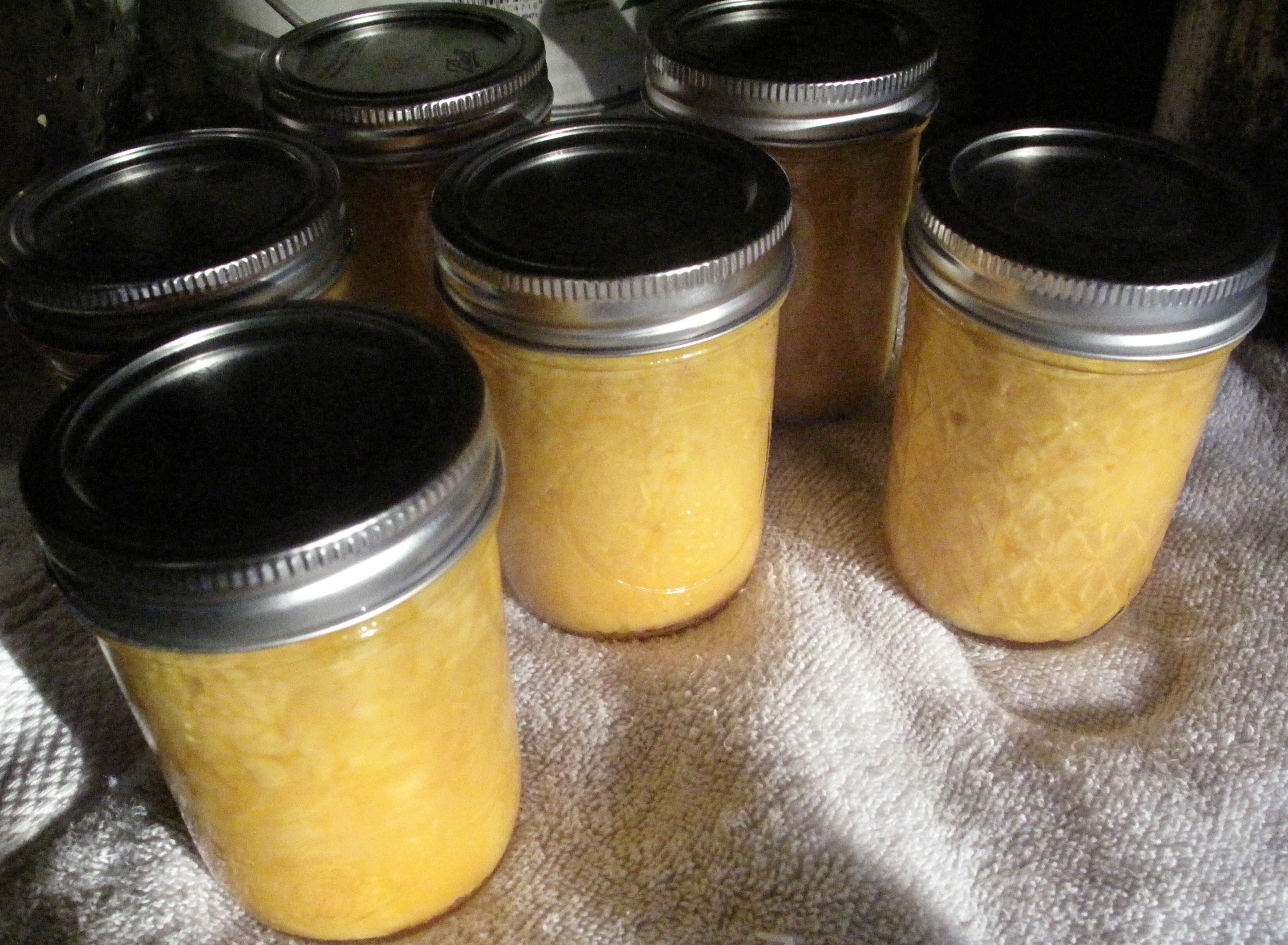
Final product:
20140928_6

As always, remember to carefully take out, place on a towel and cover to allow the processed jars to cool and seal properly. Once cool they will solidify again and presto! Real canned cheese!

Note: best to use wide mouth jars for ease of getting back out!

always faithful
survivingshtfmom

ptsd1

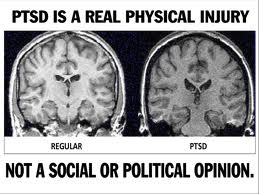
It is very natural and normal to have stress reactions after a traumatic or very upsetting event. Your behavior and emotions will change immediately afterwards and most people get better or find a ‘new normal’ after a few weeks. This is called acute PTSD. However, not everyone ‘gets over it’. As I discussed in the previous article PTSD, What is It? some people will have prolonged stress reactions to events and circumstances, most especially those that are more indicative of producing chronic PTSD. It is a real identifiable brain disorder (see picture).

ptsd2

Trauma causes REAL changes in the brain which can produce profound behavioral, emotional and physical symptoms. Please keep in mind as you read, the key to recognizing symptoms of PTSD is this: if it wasn’t there before a traumatic event happened and then appears, then there is a problem. If it was there before the traumatic event, then it most likely is not related to PTSD.

PTSD is generally diagnosed through presentation of 4 major types of symptoms that last longer than 3 months, cause you significant distress and disrupt your life and/or work.

Intrusion of the event into your life afterwards.
Recurrent recollections of the event. Memories coming back without warning with or without a ‘trigger’ (which I will discuss later)
Nightmares
Flashbacks/Reliving
These can make someone feel as though they are reliving the event in that MOMENT and can cause mental, emotional and physical symptoms. Some individuals with PTSD may experience and feel the same fears and horror as when the event took place.

Hyper Arousal/Feeling Keyed Up
Constantly on guard
Jittery/Jumpy
On Alert
Can’t relax
Can’t sleep

Numbing or Negative Changes in Beliefs and Feelings
Distancing self from people/Can’t trust other people
Unable to feel emotions
Forgetting about parts (suppression) or all of the traumatic experience
Not able to talk about the event
World becomes extremely dangerous
Depression/Anger/Irritability/Impending sense of doom

Avoidance:
Fear based and avoidance behavior typically involve all three of the above symptoms in order to avoid having to deal with the original trauma or prevent the above symptoms from occurring. Avoidance behavior is also another way of dealing with ‘triggers’. Often, people with PTSD will avoid people, places and things that remind them of the original trauma. Some people will get ‘super busy’ as way to avoid dealing with trauma.
Avoiding crowds
Avoiding driving
Avoiding all sorts of media (movie, news, video games)
Avoiding activities that are or could be associated with the trauma (ie an avid hunter may stop hunting to avoid particular triggers).

So this is the clinical take on what constitutes PTSD. But what can it really look like in someone’s life? It will vary from person to person obviously as everyone has different backgrounds, religious beliefs, personalities and different experiences in life. So lets look, in layman’s terms, what someone with PTSD may experience.

Panic Attacks or other anxiety problems including hypersensitivity to his/her surroundings….this is experience of INTENSE fear which most often is accompanied by shortness of breath, sweating, nausea, dizziness and racing heart. At the very least, discomfort may occur. This is almost directly related to hyper vigilance and may be ‘triggered’ by something totally unrelated to what is happening in that very moment.

Feelings of mistrust (could be specific or not)

Problems in daily living: not being able to function ‘normally’ at work, home and within relationships. This can include a decline in personal hygiene (or obsessiveness with it). Stopping doing daily household chores, organizational problems, etc. Emotional distancing of themselves towards other people, places and things in order to cope with feeling ‘unsafe’. This can come across as being cold, aloof, uncaring, demanding or otherwise socially unacceptable behaviors.

Substance Abuse: using drugs or alcohol to cope with emotional pain

Depression/Mood Swings: persistent sadness, anxiety, emptiness, loss of interest, guilt, shame, hopelessness about the future. Going from being happy to angry and back again for no real apparent reason. Isolating themselves. May become aggressive and angry for ‘no good reason’.

Memory problems are almost always present. Usually this shows up at first as ‘absent mindedness’ such as constantly misplacing things or loosing things. It can progress into forgetting names, appointments and other day to day things. Later on, someone with PTSD may even begin to forget past events that were important to them, or forget what they were saying in the middle of a sentence and may even say something and then repeat themselves a few minutes later.

Risk Taking Behavior such as driving too fast, multiple sex partners, starting fights and other behaviors that typically would be considered ‘risky’ with the potential to do harm to themselves or others.

Isolating from the world…many people with PTSD will in an effort to keep themselves safe begin to withdraw from people to the point that they may turn into ‘recluses’ who only go out when food or medicine is needed.

Obsessive/Compulsive Behaviors: check and rechecking that a door is locked, driving around and around in a parking lot, running to the doctor every time they sneeze. The point in obsessive/compulsive behavior to keep themselves ‘safe’ to prevent further trauma.

Super sensitivity to outside stimulation: this is directly related ‘triggers’. When the original traumatic event occurs, the brain basically ‘burns’ into the deepest part of the memories and cortex exactly what happened, how it happened and circumstances in which it occurred.

Checklist of PTSD symptoms:

Physical Symptoms:
Headaches
Stomach problems
Changes in breathing patterns (shortness of breath/not breathing normally)
Lack of energy OR Hyper Activity
Sleep problems
Emotional pain never felt before
Anxiety problems
Hypersensitivity
Hyper vigilance

Psychological Problems:
Mood swings
Memory problems
Addiction/Self Medication
Loss of personal hygiene/housekeeping
Risk taking behavior
Isolation
Depression (“what’s the point?”)
Paranoid thoughts
Reliving the event(s) with accompanying emotions

Sleep Problems:
Insomnia (not being able to fall asleep or stay asleep)
Having nightmares
Waking up covered in sweat
Kicking during sleep
Constantly waking up and falling back asleep
Waking up and being easily startled and/or being confused about where you are
Irregular sleep cycles

It is my hope that you have found this information helpful in describing what PTSD ‘looks’ like symptomatically. Too often many seek help and a diagnosis of PTSD is not given because the full spectrum of what PTSD looks like isn’t known by many doctors and mental health professionals. Do not be afraid to print this off and take it with you if you choose to seek help (which I hope you will) so that you maybe appropriately helped and treated. PTSD is multi-faceted and can be difficult to diagnosis unless you and those around you know the facts about what it is and what it looks like. But it is treatable and can be overcome. There is hope.

In part 3 of this series on PTSD I will discuss ‘triggers’ which plays an important role in PTSD.

Survivingshtfmom