Category: Emergencies


busy citydeserted city
There is no cure for ebola. There is no treatment besides supportive care for ebola. But there is one sure fire way to avoid contracting ebola. Isolation.

With growing concerns over the ‘first’ case of diagnosed ebola in the US many are now very scared. At this point in time, an entire apartment complex is on lockdown (quarantine) voluntarily. Family members and friends (including children who went to school after coming into contact with the sick man) are in isolation. Some hospital workers, ambulance workers and now some people who were in the ER when patient zero first sought medical help, are now voluntarily in quarantine. The schools where the children attended are being treated as a biohazard as is the ambulance that the man who knowingly brought ebola to the US was taken to the hospital in. The CDC is actively looking for people he may have come into contact with right now, and the latest number of people that are of high concern is 100 (as of 10 am on October 2nd, 2014). Currently, there is someone in Hawaii that is in isolation suspected of having ebola.

While at this moment in time cases and potential cases are isolated (that are known), ebola, as we have seen in Africa, this has the potential to turn into a pandemic. Right now, the CDC says it has a contagion rate of 2. That means for everyone person who has ebola, that they will infect 2 other people. Do the math, those 2 people infect 4, 4 turns into 8 and it grows from there.

There is research out of Canada that ebola maybe airborne or very well has the great potential to become airborne. They are saying that only direct contact with someone who is infected (showing symptoms) may cause infection. However, what they are NOT saying is this: Droplets from sneezing and coughing may cause infection. How? Through what I call the ‘sneeze cloud’. We all understand how the flu is transmitted, well, same goes for ebola in this sense, except with ebola, chances are about 50/50 of living through it.

Given that the flu spreads rapidly through populations (most quickly through highly concentrated populations such as schools, work places, malls, buses etc. any place where there is a high number of people) we have the potential for ebola following the same path ways. Door knobs and handles, table surfaces, cell phones and your very own hand. Any place that sneeze/cough droplets land gives rise to the possibility of infection. And just as with the flu, someone coughing or sneezing near you (towards your direction) that sneeze cloud contains the virus. And that can be quite a distance and can linger in the air. Once your hand comes into contact with the virus you can then become infected through a cut, touching your eyes, nose or mouth. And while it has yet to be scientifically proven, it wouldn’t be too hard to see how people could become infected due to the sneeze cloud.

If one thing becomes clear, it is that our very way of life (living closely together, handshakes, riding buses, constant touching of surfaces and then our faces) sets up a potentially dangerous scenario in which the ONLY real prevention becomes ISOLATION from others. There is a reason why those who may have been exposed are being quarantined (voluntarily, though I would place bets that some due to financial concerns will break it) it is because those in charge KNOW that the only way to stop a full blown pandemic from occurring is isolation. That means not going to work, no school, no shopping, no getting together at the local bar or playground. It goes even further. But the fact remains that social isolation is the ONLY sure fire way to avoid contracting Ebola. Period, end of subject.

Think about what this means…there is a reason why the schools where the children who were potentially exposed to Ebola by patient zero were closed (and cleaned up as a biohazard area) and why those children are in quarantine. Because officials know that isolation is the only sure fire preventative.

Are you personally ready to socially isolate you and yours? There is at this time no real reason to panic. And the best cure against panic and fear is to be prepared to stay home for an extended length of time. At the very least, be prepared to stay home (quarantine) for at least one month, if not longer. But start with one month and do it now. Waiting until official word of a epidemic or pandemic is not the time to begin. Now, before it happens, when the potential threat is present is when you prepare. Do it BEFORE officials make you stay home.

Basics of preparation for a potential pandemic is not that much different from preparing for a hurricane, except you are looking at a month, if not longer.

Get your emergency supplies together.
Food, water, medical supplies, sanitation needs, personal security. You want to get as much together as possible so that you do not have to go out. Remember, the only true prevention is limiting contact with others. If you question this measure you only need to look at what is happening in Sierra Leone right now. They started with a 3 DAY lockdown and now have an indefinite ‘quarantine’ in place in areas where Ebola has hit hard in an effort to stop the spread of Ebola. People are having a hard time getting food, water and medicine. The streets are empty, business are closed. These people were not prepared for a lockdown.

The ball was dropped many times in this last week by many people who are our first line of defense against infectious diseases. This means that while ‘systems’ are in place to protect us. WE the public become the last line of defense, for ourselves, our families and our communities. Now is the time to prepare for what could quickly become a dangerous situation.

For more information on Pandemic Preparedness please visit Tess Pennington’s website, Ready Nutrition

Be safe and be prepared.
survivingshtfmom

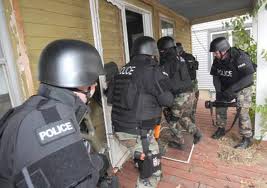
swat raidLet’s face it folks, with the increasing militarization of our public law enforcement we are now seeing more and more SWAT team style ‘raids’ on homes and businesses. Right, wrong, good, bad or indifferent, it’s a growing trend that unfortunately, I do not see ending but increasing in numbers in the coming months and years.
At a highly regarded blog site that I regularly read, someone wrote in about looking for information on how to prepare children for a SWAT team style raid on their organic farm (yes, it happens because of federal regulations, Mr. I HAVE A PEN and a PHONE loves to use regulations to further his Agenda 21 plans and Fascist policies). But this is a side note. It got me thinking about my own situation about 2 ½ years ago which I have blogged about in the past, when State officials decided to raid my house with the SWAT team and FBI, early one morning due to some content that an ex of mine had posted on his facebook page. Mind you, he was no longer living in the house and I was cooperative with the State Police when they first made contact with me regarding my ex and his behavior. I was and still am deeply effected by the SWAT raid on my home in the early hours of a January school morning. My children however, I don’t think they even blinked an eye about it. So, with this person’s question, ‘how do I prepare my children for a SWAT style raid?’ I had to ask myself why my children were completely unaffected by it and why I am still suffering PTSD from it. What is it that happened before the SWAT raid on my home that allowed my children to emerge unscathed?

Interestingly enough, about the ONLY answer that I can come up with is that we, as a family had run a few drills involving ‘home invasion’ by strangers with guns in hand. Now this may sound strange to you, but at the time I owned a bailbond business and live in the middle of nowhere where the average LEO response time is at least 10 minutes. My ex, who had experience in these matters, set out to teach us how to respond and ‘what to do’. Kinda like a tornado drill or nowadays, an active shooter drill that they do at schools. Think in those terms.
My own children were taught to stay absolutely still unless given a directive by an ADULT when there was a potential threat. We practiced different scenarios on what to do depending upon point of entry and time of day. But the bottom line is and still is: following INSTRUCTIONS given immediately and without question. So they stayed right at the breakfast table without moving, because that is what I told them to do. I had no warning, just the red dots on my chest before being manhandled out of the house and out of sight. Just enough time to tell them to STAY PUT.

To my children’s credit, they remained at the table until they were brought out by a female agent into a ‘safe vehicle’ and actually looked very calm. I will emphasize at this point:
MY CHILDREN WERE AND ARE USED TO SEEING FIREARMS IN THE HOME.

So two things to ‘prepare’ children for a SWAT style raid on your home:
1) Get them used to seeing firearms in and around the home. If it is ‘normal’ to see this and be around them, then most likely they won’t freak.
2) Practice what to do if you experience a home invasion (legal or not).
3) And I should mention, that if you do have firearms in the home, be safe regarding them. But at some point, as a LEO told me, they need to understand how to use them and what they do, seems to prevent accidental shootings in the home and takes away the ‘fun’ and ‘I am not allowed to do this’ factor.

These three things will make it easier for you and them. You practice fire drills, tornado drills, and at school they practice ‘active shooter’ drills, why NOT practice home invasion? It’s a growing trend, both legally and illegally so it makes sense to do this. What you do and how you do this is up to you and your unique home situation, but increasingly, home invasions are becoming common place. So, what’s your plan?

Next, I would like to address the otherside of this equation. Having an understanding myself of the legal system and the steps that have to be taken before action can be taken (though more and more it seems like shock and awe is standard operating procedure) I do KNOW for a fact, that you will have contact with some form of law enforcement BEFORE a SWAT style raid occurs. There’s your tip off, your ‘advanced’ warning. If state police, federal agents or regulatory agents are knocking at your door then your alarm bells need to be going off and my advice, at least for the moment is to be polite, answer their questions and do NOT BE HOSTILE. Cooperate and be beyond reasonable with them. If you appear to be a threat then they will react to you as a threat and their law enforcement training now demands overwhelming force to neutralize a potential threat to THEM. This includes your facebook posts, emails, etc. While it is okay to voice your opinions make sure you are not making threats, or even veiled threats. Trust me when I tell you, they do their homework on threat assessment (ie your potential for violence). In my case it wasn’t about my own personal threat to them, but my ex’s potential for violence and I got painted with the same brush. So its not just you, but who you associate with, your family and those who may or may not be there at the time.
Much can be avoided with clear communication and cooperation. Yes, it can be a hassle boarding on pure harassment and irrationality on their part, but if you want to head off a SWAT style raid, then do all you can to avoid it.

Next, lets talk about home/land security. Do you have motion detectors? Security lights? Cameras? How about a mouthy dog who will alert you if something or someone who doesn’t belong there? You can go as far as you want in this matter including denial of entry type setups. But the main thing is this: you are more likely to face in this day and age a true illegal home invasion than a legal one and THIS is where you should aim your security at. But it will also come in handy ‘just in case’. The point behind all of this is to give you, the adult a heads up and a few precious moments to make a decision. Unfortunately, many people have been killed in their homes because they simply did NOT know who or what was coming in and reacted in such a manner that put themselves and their family in harms way.

And finally, lets talk frankly, the thought that if you are doing ‘nothing’ wrong will keep you ‘safe’ needs to go out the door. Unfortunately this mindset gets people killed. Because you feel ‘safe’ because you are doing nothing wrong, therefore there is NO WAY they would come knocking on your door ergo something happens and you pull out your firearm because only someone intent on doing you harm would kick your door in. WRONG. Go back to the above statements and understand one thing, shock and awe works for them, otherwise they wouldn’t do it. Is it potentially used wrongly? Yes, but on the otherhand see their side of it. Most LEO’s are just following orders and commands from higher ups who most likely will forget to mention that you were cooperative, etc. All they know is they are there and wouldn’t be there unless someone knew you could be a threat. Just saying…that is how it is, right or wrong. Better to argue in court and go broke than into the ground.

On the otherhand, illegal activity of any sort can and will get you into trouble. Stay on this side of the line people. If you have had contact with law enforcement or a regulatory agent, then they perceive something is going on and if you are belligerent, uncooperative, etc. then you become a threat. Regulations carry the force of law and while I in no way support even half of the ‘regulations’ that are place, at this moment in time, tis better to argue in court. GET IT? Tis better to let them do their job, see you are not a threat and then sue their butts off later, than to fight back when everyone is running on adrenaline.
Been there, done that, in the heat of the moment, YOU need to be running your own threat assessment. Which is why I make it a point to suggest that you look for tip offs and get in place an early warning system so you can differentiate between an illegal threat and law enforcement threat. That way, you can make an informed and appropriate decision on ‘what to do’ when the invasion comes.

As a side note, in my own experience, those who entered my home unexpectedly that weekday morning were very professional. While I am still angry and I am personally still dealing with their actions (which I did receive an apology for later on), I can say that they treated my children very well. One agent even sat down with my girls and painted finger nails with them! After I got a grip and figured out what was going on I was then able to do what was necessary in dealing with them being there and my own calm in the moment allowed my own children to feel safe and relaxed which allowed everyone else to feel safe and relaxed.

Seriously, its up to you how you want things to turn out.

Home security first and foremost, situational awareness, making sure your children are NOT scared of firearms in the home, practicing ‘active shooter’ drills and attitude will determine the outcome. Unfortunately we no longer live in Camelot and we aren’t in Kansas anymore. While I see the over reaction and mistakes that get made, I have come to understand that I (YOU) truly have control in whether or not you become a victim and in turn, your children.

Stay safe and aware and prepared.

winterwarmTitle gotchya didn’t it? But no seriously, I might be a newbie in the woods but when it comes to home preparedness, I know my stuff. Come what may, I can survive at home when the grid goes down, which it can and has done during the winter. So I thought I’d share some serious practical advice and know-how when it comes to surviving in your home during a grid down situation during the winter. Been there done that and lived to tell the tale here.

Number one rule: be careful what you use inside your home…candles, oil lamps, any type of flame for light or heat can cause a fire if not carefully attended to, including propane and kerosene heaters. Trust me on that one. Better to skip those if you can, especially if you can’t be right there while using them. I bought a Detz oil lamp that you can heat up or cook on top of and it will throw some good heat too, but I would NEVER EVER leave it where my kids, dogs or I could potentially knock it over. I am ALWAYS right there. I do not use candles, though I have them if and when all other sources of light are used up.
Number two rule: be careful what you use inside your home…to heat your home, to cook food or even get a little bit of power in your house (generator). Do NOT use anything inside that is designed and intended for outdoor use. Most heat and cooking sources use some sort of combustible to generate the heat. If you have combustibles, then you have the potential for carbon monoxide and it is a silent and deadly killer. That’s why previously I advised to have a battery operated carbon monoxide alarm.

Those are the two simple rules of the road in any grid down situation (no power) no matter the season. Remember those and you will be okay.

Alright, now on to the good stuff, tips and tricks to staying warm during Snow/Icemagedeon outside of the typical preparedness/survival stuff:

Here’s the obvious one…have an alternative heat source to heat your home that does NOT depend upon electricity and obviously is SAFE to use indoors.

Story time…
When I first bought my little slice of country the house came with an unvented propane fireplace. Yep, seriously. I personally never used that thing but my ex would and did to get heat into the home during the coldest parts of the first winter. I would wake up and instantly know he had used it that nasty thing because I could smell it and my head would be pounding (carbon monoxide, I am extremely sensitive to it having had mild carbon monoxide poisoning growing up due to a faulty gas heater). Finally, I called the propane company to come get their tank of gas and cut the line…end of subject…it was pretty, but dangerous to have that thing. So round about the ex and I went about ‘spending’ the money on a wood burning stove. This argument went round about until one March morning we awoke to being able to see our breathe in the air. Power was out for only a few hours but needless to say, sometimes pain makes people see reason. I got my wood stove installed about 2 weeks later. And I use it A LOT during the cold times.

There are safe alternatives if you can’t afford a wood stove, pellet stove or something else similar, or you don’t live some place that can have one. Mr. Heater makes a very safe line of propane heaters that can be used indoors for those of you that can’t have anything else.

As a last resort if you go on over to Lehman’s you can find some really good oil lamps that will throw heat in a small space, but as previously warned, be warned this isn’t the best idea.

Best advice to getting heat into your home: Be SAFE and NEVER USE ANYTHING INTENDED FOR OUTDOOR USE.

Up next, minimize heat loss…and heat it up BEFORE it happens.

If you have a wood stove or fireplace use that, get it going well before you actually ‘need’ the heat. As for any heat pump or furnace, crank it up BEFORE the storm comes. You’d be surprised just how quickly the temperature can drop once the power is off and just how long it takes to get heat back into the hours.

One last comment on this…if you have a wood stove, pellet stove or coal stove or use a rocket stove or other type of cooking stove that requires ‘dry’ material…get it in place and out of the weather BEFORE the snow hits…nothing sucks worse than having to traipse outside when you are already cold to get the wood or find wood/pellets/coal. Not to mention that wet stuff is a lot harder to burn and get to burn that dry stuff.

Pick ONE room to ‘survive’ in where you will have the most heat.
If you have a fireplace, wood burning stove or a small propane heater, that is where you will stay.
Keep all exterior windows and doors closed and close the interior doors to the rooms you will not be using. In an extended case you may want to consider hanging blankets, or even emergency blankets over doors and windows to keep the heat in. Use duct tape or some other heavy duty tape to keep the blankets up…it works! Especially emergency Mylar blankets which you can get on the cheap in bulk on Amazon.
Also, don’t forget to block drafts such as that bottom of the door you never got around to putting weather stripping on.

Also consider your heat loss through your flooring. I have a one level home that has a crawl space underneath it and bamboo flooring…all neat and good when the power is on or during the summer, but when its cold those floors get COLD. If you have something along these lines consider insulating the floor where you will be staying put. Be mindful however of fire hazards. Blankets, rugs, pillows…kinda the same idea as when camping, get as much insulation between you and the ‘floor’ as possible to keep your body heat and heat ‘inside’.

Last resort or maybe just an idea to keep the kids distracted…set up a tent and go camping inside while the power is off. Small spaces can be warmed up with just body heat alone and if you use mylar emergency blankets over the outside of the tent you get even more ‘heat’ trapped inside the tent.

For those with a basement…in a prolonged power/heat outage consider your basement. It might not be the Hilton, but if the basement is underground it will be considerably warmer than upstairs, sometimes as much as a 20 degree difference.

Layer your clothes, can’t say too much about that. Without power and a good heat source inside the home, you are basically ‘outside’. Dress as if you were outside.

Sleeping, well, this is an interesting subject. For those that camp and don’t have a good heat source inside the home you know the rules…wet or even damp (even slightly) will suck the heat right out of you. The heat loss through the ‘head’ is a myth…it’s your feet. CHANGE YOUR CLOTHES BEFORE GOING TO SLEEP IF AT ALL POSSIBLE ESPECIALLY THE SOCKS!! If you are a camper then you have some idea of how to handle things, just inside your home. But if not…hopefully you have picked out your one room and have stayed put as much as possible. Create a communal sleeping area there. Share body heat. Sleeping bags are great. Next up pillows, cushions, blankets piled one on top of the other. You get the idea. If you do have a tent and I don’t care if its one of those outside pop up with sides that you can zip on, USE IT. The smaller the space the easier it is to get warm and stay warm. If you don’t have sleeping bags consider a cheaper, emergency alternative…emergency bivvys by SOL.

One last thing…get a stash of hand and feet warmers that hunters use. In the case of the heat going out due to power outage during a winter storm these things are cheap and easy to use to keep the extremities warm. And its sure nice to have toasty feet while you sleep!

Food comes to mind next…if you are lucky to have a wood stove with an area flat enough and big enough to cook on, good for you! (I do and do use it to cook on). But if you don’t or there isn’t an area large enough to get a pot on (such as those wood/pellet stoves that are put into a fireplace) then you have to start thinking about how you are going to eat.
It takes more calories and more water to survive when you are cold. So you need to think about this. Using camping equipment or other OUTSIDE methods of cooking INSIDE is a disaster waiting to happen. Hot food is great, but not at the risk of death. Consider keeping a stash of MRE’s (but keep in mind the colder it is the less warm/hot they will get) as a quick way to have meals. Keep bottled water on hand, this is especially important for those who have well water and becomes important for those on city water IF the power stays off for an extended time (water pipes can and do freeze). Keep canned goods that would be tolerable to eat, even if cold. Use up what is in the fridge. Cook out, yep, on the grill or your rocket stove or whatever you have…it will suck for the person tending the food outside, but hey, a hot meal is worth it.
You get the idea, beef jerky, dried foods…heck, protein bars! Just remember the 2 rules I started with.

Here are some great options and ideas for emergency cooking. Be sure to practice BEFORE you need it!

And here’s a tricky one:
When water is scarce, the “mellow yellow” rule should apply. Don’t flush the toilet unless you *really* need to.
If you have no water for flushing, use a 5 gallon bucket and paper or sawdust to absorb liquid and odor. You could also cover a bucket tightly or use a garbage bag. If you have a wood stove and don’t mind getting a little primitive, you can do what my older sisters used to do. Rather than running out to the outhouse in winter (the farmhouse I was raised in had no running water when my parents started their family), my oldest siblings would poop on several sheets of newspaper and burn it in the wood stove. As I said, primitive, but it worked. I was very glad we had indoor plumbing by the time I was born, as I have used the outhouse when there was a minus 40 below zero wind chill one Christmas and the septic system froze. It was not pleasant.
Don’t bathe unless absolutely necessary. Getting wet is a quick way to get really cold. Keep some baby wipes on hand for waterless cleaning.
If you still have running water, protect faucets that are at risk of freezing by turning on a pencil size stream of water.
(taken from commonsensehome.com…couldn’t have said it better)
But one thing to keep in mind for females…urinary tract infections can happen fast…so keep mindful ladies of keeping clean ‘down there’. Also, when its really cold and you have to go I have found that using a Shewee or PMate is an excellent way to decrease skin exposure to the cold and still ‘go’.
Fill bathtubs before hand with warm water. You can use this water just like in any other emergency.
Have hand crank options for lights and emergency radio.
DON’T use your generator in the snow/ice. Um…think electrocution hazard.
Personally I have a portable charging station that I can recharge the batteries for via the car. It’s a smaller generator that made by Boise that is mainly used on construction sites but no gas is needed, uses batteries just like the ones for your cordless drills and such… it will recharge cell phones, run a light, laptop, etc.

Finally, if keeping warm and eating won’t keep you busy, you’ll need ways of staying entertained…especially children. Just one idea here for you…they do make a DVD player, radio/karaoke player that uses D batteries  you can find it on Amazon…it is a life/mind saver, trust me…worth the investment.
These are my tips for you just in case grid down happens during snow/icemegedeon…feel free to comment and ad your own tips and tricks!

wintercar2Yes, I am being a little industrious today…but when the mood hits, you ride with it…

Have to travel during a ‘wintry’ event in your car. So now what?
I have put together a quick list of what to have in your car to survive the unexpected. No one likes to think about being stuck in traffic grid lock, or having to shelter in place or forbid, having an accident in which help may not arrive any time soon. (Been there done that one, too bad I didn’t hit the deer!) But by having a few things available to you, you can be somewhat comfortable and warm…just in case your car becomes your home away from home for awhile during the winter:
PS…I would recommend keeping it somewhat in reach within the confines of the car, so you don’t have to get out to get it.

Winter survival kit for the car:
In the bag (not optional):
Extra gloves and a beanie hat
2 extra pairs of socks
At least one warm blanket
Emergency Mylar blankets (several)
External way of recharging cell phone
Water (at least 1 quart, metal bottle preferred, plastic can break)
Hand and foot warmers
Protein Bars or Other type of no need to cook food (jerky, dried fruit)
Flashlight (handcrank type)
Flares (you can buy the type that uses batteries)
Decent first aid kit (not the little one)
Good knife
Duct tape
Folding shovel
Waterproof Matches
Ice Scraper

Optional Items but Great to Have:

Snow Boots
Extra Clothing
Kitty Litter/Rock Salt
Small Wood Camping Stove (yes, a bit overboard but you never know) great way to melt snow for water.
Small handcrank radio
PMates (look them up)
A couple empty plastic water jugs

Additionally, you should always have your cell phone with you and keep in touch with family, and while I get GPS is a tracking device (which I don’t like) I would make sure its turned on just in case…they can track you via your gps coordinates of your cell phone.
Sprint has a great service called Family Locator and is cheap and easy to use…just requires that the cell phone be on.

Keep in mind that if you are traveling with children you will need MORE of the above items and it would be a great idea to pack in the car bag a few things for them to do to stay busy if you have to be in the car for an extended period of time.
EMT’s are trained to look on cell phones for ICE numbers. In Case of Emergency…get at least one listed on yours.

While I understand that many people have to wear work appropriate clothing, if you know a winter event is coming or could potentially happen, do yourself a favor and change clothes before leaving work to head home.

Make sure you have a full tank of gas before heading out or coming home.

Remember, you can run your car for 10 minutes at a time to warm up (once an hour) if you are stuck. The kicker here is that you really NEED to MAKE SURE YOUR TAIL PIPE IS NOT BLOCKED by snow or ice. If it is covered up or iced over guess what? Carbon Monoxide WILL get into the car and that is a potential life threatening situation.

IF you have to get out of your car, be extremely mindful of what is going on around you. Cars or trucks whizzing by can hit you, sliding of cars…you get the idea. Be AWARE.

Stay or leave the car? This is situational and you may have to make that choice if you are unable to move the car for whatever reason. On that note, years ago I swerved to miss a deer in the middle of the night on a very icy and snow packed road out in the middle of nowhere. I went to the right and guess what? A nice big drainage gully was there. I managed to get the car pointed down so I didn’t roll, but had to leave the car knowing that A) no one knew exactly where I was (cell phones at that time really stunk) and wouldn’t miss me until probably about 8 hours had passed. B) The car was so far down this gully that no one would see it C) it was 2 am in the morning on a Sunday so chances were no one would be driving anytime soon.
And would you believe that I was in area with homes scattered here and there and after knocking on a few doors (pounding actually) and no answer, I gave up and started walking back towards civilization. It was freezing cold and although I had appropriate cold weather gear on (including warm boots) as I walked towards a telephone I got colder and colder. There were a few other things that I found interesting too…a) although I was walking on a major roadway, not one person who passed me stopped to see if I was okay b) walking in the cold becomes a really hard job after about an hour (it took me 3 ½ hours to make it to a working telephone).
So that is my story on that…but the decision to stay or leave can become a life saving or life endangering one and is something to think about before hand.

If you DO happen to make the decision to leave your car…leave a note with your name, number, emergency contact and your hopeful destination…leave your car unlocked too. No sense in making anyone’s job harder and if you have to turn around back to the car for some reason and your hands are really cold, it will make it easier to get back into.

Just my thoughts on being prepared for a winters ride.

wintercar

hypothermiaWith another winter storm coming in across the southern and eastern United States, I thought it would be a good idea to share with you the signs and symptoms of hypothermia which can be deadly if not treated promptly.
The snow and ice predicted over the coming days may leave you stuck in a car, with no power or have you outside trying to clear the wintry mess up or just going outside to play.

A must read and print off:
http://www.princeton.edu/~oa/safety/hypocold.shtml

All information below was taken from the Mayo Clinic Website:

Definition:
Hypothermia is a medical emergency that occurs when your body loses heat faster than it can produce heat, causing a dangerously low body temperature. Normal body temperature is around 98.6 F (37 C). Hypothermia (hi-po-THUR-me-uh) occurs as your body temperature passes below 95 F (35 C).
When your body temperature drops, your heart, nervous system and other organs can’t work correctly. Left untreated, hypothermia can eventually lead to complete failure of your heart and respiratory system and to death.
Hypothermia is most often caused by exposure to cold weather or immersion in a cold body of water. Primary treatments for hypothermia are methods to warm the body back to a normal temperature.
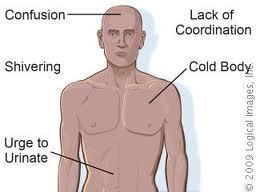
Shivering is your body’s automatic defense against cold temperature — an attempt to warm itself. Constant shivering is a key sign of hypothermia. Signs and symptoms of moderate to severe hypothermia include:
• Shivering
• Clumsiness or lack of coordination
• Slurred speech or mumbling
• Stumbling
• Confusion or difficulty thinking
• Poor decision making, such as trying to remove warm clothes
• Drowsiness or very low energy
• Apathy or lack of concern about one’s condition
• Progressive loss of consciousness
• Weak pulse
• Slow, shallow breathing
A person with hypothermia usually isn’t aware of his or her condition, because the symptoms often begin gradually and because the confused thinking associated with hypothermia prevents self-awareness.

Please keep in mind that your first line of defense against hypothermia is prevention:
Before you or your children step out into cold air, remember the advice that follows with the simple acronym COLD — cover, overexertion, layers, dry:
• Cover. Wear a hat or other protective covering to prevent body heat from escaping from your head, face and neck. Cover your hands with mittens instead of gloves. Mittens are more effective than gloves because mittens keep your fingers in closer contact with one another.
• Overexertion. Avoid activities that would cause you to sweat a lot. The combination of wet clothing and cold weather can cause you to lose body heat more quickly.
• Layers. Wear loose fitting, layered, lightweight clothing. Outer clothing made of tightly woven, water-repellent material is best for wind protection. Wool, silk or polypropylene inner layers hold body heat better than cotton does.
• Dry. Stay as dry as possible. Get out of wet clothing as soon as possible. Be especially careful to keep your hands and feet dry, as it’s easy for snow to get into mittens and boots.
Keeping children safe outdoors
The American Academy of Pediatrics suggests the following tips to help prevent hypothermia when children are outside in the winter:
• Dress infants and young children in one more layer than an adult would wear in the same conditions.
• Limit the amount of time children spend outside in the cold.
• Have children come inside frequently to warm themselves.
Winter car safety
Whenever you’re traveling during bad weather, be sure someone knows where you’re headed, and at what time you’re expected to arrive. That way, if you get into trouble on your way, emergency responders will know where to look for your car. It’s also a good idea to keep emergency supplies in your car in case you get stranded. Supplies may include several blankets, matches, candles, a first-aid kit, dry or canned food, and a can opener. Travel with a cellphone if possible. If you’re stranded, put everything you need in the car with you, huddle together and stay covered. Run the car for 10 minutes each hour to warm it up. Make sure a window is slightly open and the exhaust pipe isn’t covered with snow while the engine is running.
Drinking alcohol
Take the following precautions to avoid alcohol-related risks of hypothermia.
Don’t drink alcohol:
• If you’re going to be outside in cold weather
• If you’re boating
• Before going to bed on cold nights
Cold-water safety
Water doesn’t have to be extremely cold to cause hypothermia. Any water that’s colder than normal body temperature causes heat loss. The following tips may increase your survival time in cold water, if you accidentally fall in:
• Wear a life jacket. If you plan to ride in a watercraft, wear a life jacket. A life jacket can help you stay alive longer in cold water by enabling you to float without using energy and by providing some insulation. Keep a whistle attached to your life jacket to signal for help.
• Get out of the water if possible. Get out of the water as much as possible, such as climbing onto a capsized boat or grabbing onto a floating object.
• Don’t attempt to swim unless you’re close to safety. Unless a boat, another person or a life jacket is close by, stay put. Swimming will use up energy and may shorten survival time.
• Position your body to minimize heat loss. Use a body position known as the heat escape lessening position (HELP) to reduce heat loss while you wait for assistance. Hold your knees to your chest to protect the trunk of your body. If you’re wearing a life jacket that turns your face down in this position, bring your legs tightly together, your arms to your sides and your head back.
• Huddle with others. If you’ve fallen into cold water with other people, keep warm by facing each other in a tight circle.
• Don’t remove your clothing. While you’re in the water, don’t remove clothing. Buckle, button and zip up your clothes. Cover your head if possible. The layer of water between your clothing and your body will help insulate you. Remove clothing only after you’re safely out of the water and can take measures to get dry and warm.

Hypothermia not necessarily related to the outdoors
Hypothermia isn’t always the result of exposure to extremely cold outdoor temperatures. An older person may develop mild hypothermia after prolonged exposure to indoor temperatures that would be tolerable to a younger or healthier adult — for example, temperatures in a poorly heated home or in an air-conditioned home.
Symptoms of mild hypothermia not related to extreme cold exposure are nearly identical to those of more severe hypothermia, but may be much less obvious. Signs and symptoms of mild hypothermia may include:
• Shivering
• Faster breathing
• Trouble speaking
• Confusion
• Lack of coordination
• Fatigue
• Increased heart rate
• High blood pressure
Hypothermia in infants
Typical signs of hypothermia in an infant include:
• Bright red, cold skin
• Very low energy
When to see a doctor
Call 911 or your local emergency number if you see someone with signs of hypothermia or if you suspect a person has had unprotected or prolonged exposure to cold weather or water. If possible take the person inside, remove wet clothing, and cover him or her in layers of blankets.
How hypothermia happens:
Hypothermia occurs when your body loses heat faster than it produces it. The most common causes of hypothermia are exposure to cold-weather conditions or cold water. But prolonged exposure to any environment colder than your body can lead to hypothermia if you aren’t dressed appropriately or can’t control the conditions. Specific conditions leading to hypothermia can include:
• Wearing clothes that aren’t warm enough for weather conditions
• Staying out in the cold too long
• Unable to get out of wet clothes or move to a warm, dry location
• Accidental falls in water, as in a boating accident
• Inadequate heating in the home, especially for older people and infants
• Air conditioning that is too cold, especially for older people and infants
How your body loses heat
The mechanisms of heat loss from your body include the following:
• Radiated heat. Most heat loss is due to heat radiated from unprotected surfaces of your body.
• Direct contact. If you’re in direct contact with something very cold, such as cold water or the cold ground, heat is conducted away from your body. Because water is very good at transferring heat from your body, body heat is lost much faster in cold water than in cold air. Similarly, heat loss from your body is much faster if your clothes are wet, as when you’re caught out in the rain.
• Wind. Wind removes body heat by carrying away the thin layer of warm air at the surface of your skin. A wind chill factor is important in causing heat loss.

Risk Factors:

A number of factors can increase the risk of developing hypothermia:
• Older age. People age 65 and older are more vulnerable to hypothermia for a number of reasons. The body’s ability to regulate temperature and to sense cold may lessen with age. Older people are also more likely to have a medical condition that affects temperature regulation. Some older adults may not be able to communicate when they are cold or may not be mobile enough to get to a warm location.
• Very young age. Children lose heat faster than adults do. Children have a larger head-to-body ratio than adults do, making them more prone to heat loss through the head. Children may also ignore the cold because they’re having too much fun to think about it. And they may not have the judgment to dress properly in cold weather or to get out of the cold when they should. Infants may have a special problem with the cold because they have less efficient mechanisms for generating heat.
• Mental problems. People with a mental illness, dementia or another condition that interferes with judgment may not dress appropriately for the weather or understand the risk of cold weather. People with dementia may wander from home or get lost easily, making them more likely to be stranded outside in cold or wet weather.
• Alcohol and drug use. Alcohol may make your body feel warm inside, but it causes your blood vessels to dilate, or expand, resulting in more rapid heat loss from the surface of your skin. The use of alcohol or recreational drugs can affect your judgment about the need to get inside or wear warm clothes in cold weather conditions. If a person is intoxicated and passes out in cold weather, he or she is likely to develop hypothermia.
• Certain medical conditions. Some health disorders affect your body’s ability to regulate body temperature. Examples include underactive thyroid (hypothyroidism), poor nutrition, stroke, severe arthritis, Parkinson’s disease, trauma, spinal cord injuries, burns, disorders that affect sensation in your extremities (for example, nerve damage in the feet of people with diabetes), dehydration, and any condition that limits activity or restrains the normal flow of blood.
• Medications. A number of drugs, including certain antidepressants, antipsychotics and sedatives, can change the body’s ability to regulate its temperature.
Diagnosis:
The diagnosis of hypothermia is usually apparent based on a person’s physical signs and the conditions in which the person with hypothermia became ill or was found.
A diagnosis may not be readily apparent, however, if the symptoms are mild, as when an older person who is indoors has symptoms such as confusion, lack of coordination and speech problems. In such cases, an exam may include a temperature reading with a rectal thermometer that reads low temperatures.
Until you can obtain professional medical care:
First-aid care
• Be gentle. When you’re helping a person with hypothermia, handle him or her gently. Limit movements to only those that are necessary. Don’t massage or rub the person. Excessive, vigorous or jarring movements may trigger cardiac arrest.
• Move the person out of the cold. Move the person to a warm, dry location if possible. If you’re unable to move the person out of the cold, shield him or her from the cold and wind as much as possible.
• Remove wet clothing. If the person is wearing wet clothing, remove it. Cut away clothing if necessary to avoid excessive movement.
• Cover the person with blankets. Use layers of dry blankets or coats to warm the person. Cover the person’s head, leaving only the face exposed.
• Insulate the person’s body from the cold ground. If you’re outside, lay the person on his or her back on a blanket or other warm surface.
• Monitor breathing. A person with severe hypothermia may appear unconscious, with no apparent signs of a pulse or breathing. If the person’s breathing has stopped or appears dangerously low or shallow, begin cardiopulmonary resuscitation (CPR) immediately if you’re trained.
• Share body heat. To warm the person’s body, remove your clothing and lie next to the person, making skin-to-skin contact. Then cover both of your bodies with blankets.
• Provide warm beverages. If the affected person is alert and able to swallow, provide a warm, nonalcoholic, noncaffeinated beverage to help warm the body.
• Use warm, dry compresses. Use a first-aid warm compress (a plastic fluid-filled bag that warms up when squeezed), or a makeshift compress of warm water in a plastic bottle or a dryer-warmed towel. Apply a compress only to the neck, chest wall or groin. Don’t apply a warm compress to the arms or legs. Heat applied to the arms and legs forces cold blood back toward the heart, lungs and brain, causing the core body temperature to drop. This can be fatal.
• Don’t apply direct heat. Don’t use hot water, a heating pad or a heating lamp to warm the person. The extreme heat can damage the skin or even worse, cause irregular heartbeats so severe that they can cause the heart to stop.

If you think you or someone you know is experiencing signs and symptoms of hypothermia seek medical treatment!

Winter Storm Survival

winterDid winter catch you unaware? Nope, not me, but this winter has brought to my attention just how unprepared so many people are to deal with winter storms that can bring ice, snow, power outages, traffic jams, kids out of school for days on end. Can anyone say Atlanta and what happened at the end of January? Up here in Virginia we received storm after storm and down at Virginia Beach they got caught with the unusual, if not quite unheard of 10 inches of snow.
Roads were slick, icy, snow packed. Can’t tell you how many tracks I saw going off the side of the road into to trees. But I am digressing here. We all know what winter can bring and what can happen IF you aren’t prepared or caught unaware.
Here are some of my own winter storm survival ‘rules’ that I have learned over the years and have kept me and mine safe and sound.

First and foremost though, be AWARE of the potential weather in and around your area.

Rule #1: If you can, stay home or shelter in place. Seems simple yeah? But how many of you go to work or just have to do one last thing at the split moment the storm is coming in or just getting going. Now I will admit I break this rule on occassion, but that brings me to…
Rule #2: Don’t drive if you can’t drive…what are your limits and capabilities in snow? Your experience? Your vehicle? I have driven a LOT of miles in bad road conditions over the years because of a job I had. It only took ONE TIME for me to ditch my car to learn that slow as you go and no sharp steering or breaking is KING if you have to drive in snow and/or ice. Oh and by the way…just because you have a truck or SUV with 4 wheel drive does NOT mean you get to drive fast or suddenly can defy the laws of physics regarding ice 🙂
Rule #3: Keep some sort of emergency bag with food, water, light and more clothes or a blanket in your vehical. You get stuck out on the road or find yourself having to shelter in place you’ll be ahead of the game.
Rule #4: Always let someone know when you are leaving and the route you will be taking. This rule also includes…keeping in touch! Keep that cell phone battery charged. Check to make sure you can charge it in your vehical or some otherway. Test your charging cords…they do go bad.

Now for some rules at home:
Rule #1: if you don’t have to leave…stay home, yep, there’s that rule again, but its worth repeating…
Rule #2: Always keep extra food IN THE HOUSE, that way you get to avoid the phenomenon known as…’oh my god, its going to snow, time to get bread, milk and toliet paper!’ you know, that bum rush to the store.
Rule #3: Have a way to stay warm if the power goes out…extra blankets, a wood stove, propane heaters. This is a subject in and of itself, but have it.
Rule #4: Have a battery operated carbon monoxide detector in your house that WORKS.
Rule #5: If you do have to go outside, be sure to wear appropriate clothing for the conditions. I don’t care if its just to take the garbage out…you slip and fall, well, you will appreciate at least being warm until you can get help.
Rule #6: Don’t forget your animals…the family pet or farm animals require more food, unfrozen water, and more attention to their shelter or less time/exposure to the elements.
Lastly, and this isn’t so much a rule…keep sane, sleep in or something you have been putting off…work isn’t everything and sometimes its just nice to let winter be winter.

Stay safe!