
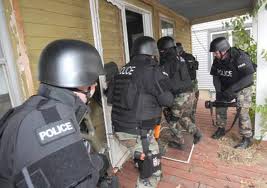
 Let’s face it folks, with the increasing militarization of our public law enforcement we are now seeing more and more SWAT team style ‘raids’ on homes and businesses. Right, wrong, good, bad or indifferent, it’s a growing trend that unfortunately, I do not see ending but increasing in numbers in the coming months and years.
At a highly regarded blog site that I regularly read, someone wrote in about looking for information on how to prepare children for a SWAT team style raid on their organic farm (yes, it happens because of federal regulations, Mr. I HAVE A PEN and a PHONE loves to use regulations to further his Agenda 21 plans and Fascist policies). But this is a side note. It got me thinking about my own situation about 2 ½ years ago which I have blogged about in the past, when State officials decided to raid my house with the SWAT team and FBI, early one morning due to some content that an ex of mine had posted on his facebook page. Mind you, he was no longer living in the house and I was cooperative with the State Police when they first made contact with me regarding my ex and his behavior. I was and still am deeply effected by the SWAT raid on my home in the early hours of a January school morning. My children however, I don’t think they even blinked an eye about it. So, with this person’s question, ‘how do I prepare my children for a SWAT style raid?’ I had to ask myself why my children were completely unaffected by it and why I am still suffering PTSD from it. What is it that happened before the SWAT raid on my home that allowed my children to emerge unscathed?
Interestingly enough, about the ONLY answer that I can come up with is that we, as a family had run a few drills involving ‘home invasion’ by strangers with guns in hand. Now this may sound strange to you, but at the time I owned a bailbond business and live in the middle of nowhere where the average LEO response time is at least 10 minutes. My ex, who had experience in these matters, set out to teach us how to respond and ‘what to do’. Kinda like a tornado drill or nowadays, an active shooter drill that they do at schools. Think in those terms.
My own children were taught to stay absolutely still unless given a directive by an ADULT when there was a potential threat. We practiced different scenarios on what to do depending upon point of entry and time of day. But the bottom line is and still is: following INSTRUCTIONS given immediately and without question. So they stayed right at the breakfast table without moving, because that is what I told them to do. I had no warning, just the red dots on my chest before being manhandled out of the house and out of sight. Just enough time to tell them to STAY PUT.
To my children’s credit, they remained at the table until they were brought out by a female agent into a ‘safe vehicle’ and actually looked very calm. I will emphasize at this point:
MY CHILDREN WERE AND ARE USED TO SEEING FIREARMS IN THE HOME.
So two things to ‘prepare’ children for a SWAT style raid on your home:
1) Get them used to seeing firearms in and around the home. If it is ‘normal’ to see this and be around them, then most likely they won’t freak.
2) Practice what to do if you experience a home invasion (legal or not).
3) And I should mention, that if you do have firearms in the home, be safe regarding them. But at some point, as a LEO told me, they need to understand how to use them and what they do, seems to prevent accidental shootings in the home and takes away the ‘fun’ and ‘I am not allowed to do this’ factor.
These three things will make it easier for you and them. You practice fire drills, tornado drills, and at school they practice ‘active shooter’ drills, why NOT practice home invasion? It’s a growing trend, both legally and illegally so it makes sense to do this. What you do and how you do this is up to you and your unique home situation, but increasingly, home invasions are becoming common place. So, what’s your plan?
Next, I would like to address the otherside of this equation. Having an understanding myself of the legal system and the steps that have to be taken before action can be taken (though more and more it seems like shock and awe is standard operating procedure) I do KNOW for a fact, that you will have contact with some form of law enforcement BEFORE a SWAT style raid occurs. There’s your tip off, your ‘advanced’ warning. If state police, federal agents or regulatory agents are knocking at your door then your alarm bells need to be going off and my advice, at least for the moment is to be polite, answer their questions and do NOT BE HOSTILE. Cooperate and be beyond reasonable with them. If you appear to be a threat then they will react to you as a threat and their law enforcement training now demands overwhelming force to neutralize a potential threat to THEM. This includes your facebook posts, emails, etc. While it is okay to voice your opinions make sure you are not making threats, or even veiled threats. Trust me when I tell you, they do their homework on threat assessment (ie your potential for violence). In my case it wasn’t about my own personal threat to them, but my ex’s potential for violence and I got painted with the same brush. So its not just you, but who you associate with, your family and those who may or may not be there at the time.
Much can be avoided with clear communication and cooperation. Yes, it can be a hassle boarding on pure harassment and irrationality on their part, but if you want to head off a SWAT style raid, then do all you can to avoid it.
Next, lets talk about home/land security. Do you have motion detectors? Security lights? Cameras? How about a mouthy dog who will alert you if something or someone who doesn’t belong there? You can go as far as you want in this matter including denial of entry type setups. But the main thing is this: you are more likely to face in this day and age a true illegal home invasion than a legal one and THIS is where you should aim your security at. But it will also come in handy ‘just in case’. The point behind all of this is to give you, the adult a heads up and a few precious moments to make a decision. Unfortunately, many people have been killed in their homes because they simply did NOT know who or what was coming in and reacted in such a manner that put themselves and their family in harms way.
And finally, lets talk frankly, the thought that if you are doing ‘nothing’ wrong will keep you ‘safe’ needs to go out the door. Unfortunately this mindset gets people killed. Because you feel ‘safe’ because you are doing nothing wrong, therefore there is NO WAY they would come knocking on your door ergo something happens and you pull out your firearm because only someone intent on doing you harm would kick your door in. WRONG. Go back to the above statements and understand one thing, shock and awe works for them, otherwise they wouldn’t do it. Is it potentially used wrongly? Yes, but on the otherhand see their side of it. Most LEO’s are just following orders and commands from higher ups who most likely will forget to mention that you were cooperative, etc. All they know is they are there and wouldn’t be there unless someone knew you could be a threat. Just saying…that is how it is, right or wrong. Better to argue in court and go broke than into the ground.
On the otherhand, illegal activity of any sort can and will get you into trouble. Stay on this side of the line people. If you have had contact with law enforcement or a regulatory agent, then they perceive something is going on and if you are belligerent, uncooperative, etc. then you become a threat. Regulations carry the force of law and while I in no way support even half of the ‘regulations’ that are place, at this moment in time, tis better to argue in court. GET IT? Tis better to let them do their job, see you are not a threat and then sue their butts off later, than to fight back when everyone is running on adrenaline.
Been there, done that, in the heat of the moment, YOU need to be running your own threat assessment. Which is why I make it a point to suggest that you look for tip offs and get in place an early warning system so you can differentiate between an illegal threat and law enforcement threat. That way, you can make an informed and appropriate decision on ‘what to do’ when the invasion comes.
As a side note, in my own experience, those who entered my home unexpectedly that weekday morning were very professional. While I am still angry and I am personally still dealing with their actions (which I did receive an apology for later on), I can say that they treated my children very well. One agent even sat down with my girls and painted finger nails with them! After I got a grip and figured out what was going on I was then able to do what was necessary in dealing with them being there and my own calm in the moment allowed my own children to feel safe and relaxed which allowed everyone else to feel safe and relaxed.
Seriously, its up to you how you want things to turn out.
Home security first and foremost, situational awareness, making sure your children are NOT scared of firearms in the home, practicing ‘active shooter’ drills and attitude will determine the outcome. Unfortunately we no longer live in Camelot and we aren’t in Kansas anymore. While I see the over reaction and mistakes that get made, I have come to understand that I (YOU) truly have control in whether or not you become a victim and in turn, your children.
Stay safe and aware and prepared.







 survivingshtfmom
Winter Camping- Staying Warm Pt. 1 Clothing
Hypothermia during cold weather is probably more common than we realize… and CLOTHING is your first line of defense along with a little knowledge of how heat loss occurs.
I should know, went out hunting one early firearms season weekend, it was still about 40ish degrees and I am a warm person to begin with. Typically I get hot. It was overcast, chance of rain only about 20% and I dressed according to the weather forecast…just 3 layers, didn’t take anything for rain, no jacket, no coat, no hat, no gloves (blaze orange vest required!)…figured I would be good to go.
Yeah, sure…about ½ hour after settling in for the duration it started to drizzle, then rain…and don’t you know the temperature dropped too? Let me tell you something, I am a pitbull and won’t give up, but after getting pretty damp (not soaking) and handling the cold steel of the shotgun I use for hunting, with water dripping off the end of my nose…I started to feel the creepin’ cold setting in. About hour and a half of that (still raining off and on) I was down right cold and shivering. Still I sat there. DH was further down and finally called it a day (he was warm and dry btw having been ready for it if it came)…thank goodness…I didn’t realize until I stood up and started moving just how far down the road of hypothermia I had traveled, shaking like a leaf, a bit disoriented (in my own backyard!!!) and freezing cold to the bone. And did I mention my toes were numb? My clothing was only damp mind you, but my hands were frozen and fingers hard to move too, hair was wet and well…lesson learned. I actually went out the following day and bought a blaze orange water resistant, blaze orange hoodie…definitely warm and it is now my go to when I go out in the woods.
Soo…with that said…
#1 is clothing…dress for the weather and overkill is not a bad idea…you can always take things off but you can’t add enough if you get cold. Layers, water resistant, nylon, wool…and take extra with you just in case, especially socks. I also have a couple of different gloves I take with me, one pair is rather thin and another set is thicker. In this category I will include having the right socks and shoes. As VaCreepinOutdoors has pounded into my head lately, your feet is where most heat loss occurs. The thing about the head is a myth. Frankly I only wear a headband that goes over my ears and am just fine with that. And the ground is a heat sucker especially when damp or wet and its cold outside. Guess what touches the ground? Yep, your feet. I will say that cotton socks are a no go, wool socks, nylon are best. Cotton for the most part in the winter is a no go as it retains sweat which means heat loss.
Also, be mindful of your shoes. Unfortunately during this camping trip I chose to use my light weight hunting boots instead of my heavier ones, which turned out to be not so smart by the middle of the evening…toes were frozen after kneeling on the ground trying to get a fire going. Knees got damp and that was okay, I had some thermals on. But my right foot was resting on the ground (sole side up) so that the thinnest area on the boot was flat on the ground. Bingo…heat loss. And it was funny, but after those toes got cold the rest of my body started getting cold too. I wound up throwing on my heavy hunting coat on top of my hoodie, long sleeve shirt and jogging shirt that I like to wear when out and about (nothing like a bra to make life miserable!). And I will tell you something else…cold feet in cold boots next to a fire doesn’t work!!! I had thought to bring along some of those air activated hand warmers and wound up using those in toes of my boots, but those things took FOREVER to warm up, think it was about an hour or so before my toes unfroze. But more on those things later…
Got a bit of relief after taking my boots of for a short bit (long enough to stick the hand warmers into the toes of my boots) but put those babies back on…may have been better off leaving the boots off and putting my feet up close to the fire until the warmers were up and working.
I had my gloves with me but wound up still having to stick hands over the fire to warm the fingers up when I had to take them off to hook up sleeping bags…cold fingers and toes do not make for an easy evening of trying to get things done…walking is hard and dexterity goes out the door…
I wasn’t miserable camping in the cold but the experience taught me a few things about footwear and clothing…I had the socks right, but not the boots and definitely learned about heat loss due to the ground. Even slightly damp socks will suck the heat right out of you. Won’t be repeating those two mistakes again for sure. Waterproof, snow/winter boots, more than one pair of extra socks and making sure that I have a set of toe warmers open and ready to go if I even THINK that my feet are going to get cold. Also, I need to figure out some way of putting a barrier between me and the ground that easy and light weight to kneel on…VaCreepinOutdoors keeps some sort of oilskin cloth on him for that and think I have solved that problem.
Clothing wasn’t a real issue having been there done that one before, but I did try out a ‘new’ type of thermal leggings and I will tell you what, I think they would be good for spring or summer, but will be going with Columbia’s Omni-Heat or the old fashion type in the future. My legs weren’t cold, but they weren’t warm either.
At this point I will go over signs of hypothermia just so you can be aware…its not fun nor pleasant as I can attest to personally.
Signs of Hypothermia:
Hypothermia is most often caused by exposure to cold weather or immersion in a cold body of water. Primary treatments for hypothermia are methods to warm the body back to a normal temperature.
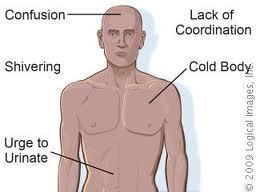
Shivering is your body’s automatic defense against cold temperature — an attempt to warm itself. Constant shivering is a key sign of hypothermia. Signs and symptoms of moderate to severe hypothermia include:
• Shivering
• Clumsiness or lack of coordination
• Slurred speech or mumbling
• Stumbling
• Confusion or difficulty thinking
• Poor decision making, such as trying to remove warm clothes
• Drowsiness or very low energy
• Apathy or lack of concern about one’s condition
• Progressive loss of consciousness
• Weak pulse
• Slow, shallow breathing
More on hypothermia here.
So, essentially clothing and the right TYPE of clothing for the weather is your best friend when going out in the woods. I did bring extra clothing just in case (that’s the nice thing about planned camping) but no true rain gear such as Frog Togs…an oversight on my part that luckily didn’t cause me any problems. So, lessons learned, mistakes not to be repeated (hopefully). Hope you get something useful out of this!