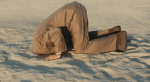
 Yet again I return to blog after a long absence…the past year and a half has taught me A LOT about me personally and those around me when SHFT happens. Some people disappear, others are very supportive and helpful, and others take advantage. I have also learned that there are those who might stick around, be helpful for a while but in the end, the pressure is just too much and they ‘disappear’ into their own world. All in all, I have figured out who I can and cannot count on and the list is a very short one. Sad really to realize that most people cannot or will not be around when and if anything truly life altering happens. But I am trying to look at it this way, better to know NOW than to continue to believe that certain people will have my back if and when things go south. But I have learned this past year a few hard lessons about normalcy bias and people, including myself and you are prone to it…
What is normalcy bias?
Normalcy bias
From Wikipedia, the free encyclopedia….
The normalcy bias, or normality bias, refers to a mental state people enter when facing a disaster. It causes people to underestimate both the possibility of a disaster occurring and its possible effects. This often results in situations where people fail to adequately prepare for a disaster, and on a larger scale, the failure of governments to include the populace in its disaster preparations. The assumption that is made in the case of the normalcy bias is that since a disaster never has occurred then it never will occur. It also results in the inability of people to cope with a disaster once it occurs. People with a normalcy bias have difficulties reacting to something they have not experienced before. People also tend to interpret warnings in the most optimistic way possible, seizing on any ambiguities to infer a less serious situation.[1]
Possible causes
The normalcy bias may be caused in part by the way the brain processes new data. Research suggests that even when the brain is calm, it takes 8–10 seconds to process new information. Stress slows the process, and when the brain cannot find an acceptable response to a situation, it fixates on a single and sometimes default solution that may or may not be correct. An evolutionary reason for this response could be that paralysis gives an animal a better chance of surviving an attack; predators are less likely to eat prey that isn’t struggling.[2]
Effects
The normalcy bias often results in unnecessary deaths in disaster situations. People will freeze, emotionally, psychologically and physically. The lack of preparation for disasters often leads to inadequate shelter, supplies, and evacuation plans. People make the assumption that ‘its nothing’ or that someone else will take care of the problem or them. Even when all these things are in place, individuals with a normalcy bias often refuse to leave their homes. Studies have shown that more than 70% of people check with others before deciding to evacuate.[2]
The normalcy bias also causes people to drastically underestimate the effects of the disaster. Therefore, they think that everything will be all right, while information from the radio, television, or neighbors gives them reason to believe there is a risk. This creates a cognitive dissonance that they then must work to eliminate. Some manage to eliminate it by refusing to believe new warnings coming in and refusing to evacuate (maintaining the normalcy bias), while others eliminate the dissonance by escaping the danger. The possibility that some may refuse to evacuate causes significant problems in disaster planning.[3]
 Examples
Not limited to, but most notably: The Nazi genocide of millions of Jews. Even after knowing friends and family were being taken against their will, the Jewish community still stayed put, and refused to believe something was “going on.” Because of the extreme nature of the situation it is understandable why most would deny it.
Little Sioux Scout camp in June 2008. Despite being in the middle of “Tornado Alley,” the campground had no tornado shelter to offer protection from a strong tornado.[4]
New Orleans before Hurricane Katrina. Inadequate government and citizen preparation and the denial that the levees could fail were an example of the normalcy bias, as were the thousands of people who refused to evacuate.[citation needed]
During the September 11 attacks, many in the World Trade Center returned to their offices during the evacuation to turn off their computers and ultimately died when the towers collapsed.[citation needed]
Normalcy Bias has also been used to help explain why the United States continues to raise its national debt ceiling, which now exceeds 107% of its Gross Domestic Product. Historically, the US has held a very high credit rating of AAA, however, the growing concern over US monetary policy lead to the United States federal government credit-rating downgrade to AA+ by Standard & Poor in 2011. Later that same year, GAO Comptroller Gene Dodaro warned memebers of Congress that the current national debt is “unsustainable” at a time where the Debt-to-GDP ratio was considerably less at 73%.[5]
Included into ‘normalcy bias’ is the idea that ‘its somebody else’s problem’:
Somebody Else’s Problem
From Wikipedia, the free encyclopedia
Somebody Else’s Problem (also known as Someone Else’s Problem or SEP) is a psychological effect where individuals/populations of individuals choose to dissociate themselves from an issue that may be in critical need of recognition. Such issues may be of large concern to the population as a whole but can easily be a choice of ignorance by an individual. Author Douglas Adams‘ description of the condition, which he ascribes to a physical “SEP field,” has helped make it a generally recognized phenomenon. Somebody Else’s Problem used to capture public attention on matters that may have been overlooked and has less commonly been used to identify concerns that an individual suffering symptoms of depression should ignore. This condition has also been employed as trivial shorthand to describe factors that are “out of scope” in the current context.[1]
Psychology
Various areas of psychology and philosophy of perception are concerned with the reasons why individuals often ignore issues that are of relative or critical importance. Optimism bias tends to reduce issues of subjectivity due to the tendency to have thought processes that are overly positive- “Overly positive assumptions can lead to disastrous miscalculations — make us less likely to get health checkups, apply sunscreen or open a savings account, and more likely to bet the farm on a bad investment.”[2]
Where multiple individuals simultaneously experience the same stimulus, diffusion of responsibility and/or the bystander effect may release individuals from the need to act, and if no-one from the group is seen to act, each individual may be further inhibited by conformity. An example of such instances would be the murder of Kitty Genovese, who on March 13, 1964 was stabbed and killed outside of her apartment building. “Most of the evidence suggests that at least half a dozen-and perhaps many more-of her 30 or so neighbours heard the events but failed to come to her aid. Most didn’t even bother to call the police.”[3]
When individuals are exposed to a multitude of messages about pressing matters of concern- information overload (now also known as Information Fatigue Syndrome) may be a result. In Joseph Ruff’s article “Information Overload: Causes, Symptoms and Solutions” Ruff states, “Once capacity is surpassed additional information becomes noise and results in a decrease in information processing and decision quality”. [4] A student who has spent the entire semester socializing instead of studying would find themselves in a state of information overload the day before a final exam for example.
There may also be a tendency to argue that since a proposed solution does not fit a problem entirely then the entire solution should be discarded. This is an example of a perfect solution fallacy. “This fallacy is often employed by those who believe no action should be taken on a particular issue and use the fallacy to argue against any proposed action”.[5]
However, taking responsibility for negative events that are outside an individual’s control is related to depression and learned helplessness.[6] Part of the solution is to help the individual to realistically assign a proportion of responsibility to herself/himself, parents and others (step I in the RIBEYE cognitive behavioral therapy problem-solving method).[6][7][8]
And on top of this, many have the idea that ‘others’ will be there to make things better for them (ie police officers, doctors, FEMA, Red Cross, Social Services). Really??? I can tell you differently as can many others who have lost jobs, lost loved ones, a home, the only vehicle they had and many other SHFT senarios.
Esther Inglis-Arkell explains normalcy bias:
When disaster strikes, some people lose their heads, some people become cool and effective, but by far most people act as if they’ve suddenly forgotten the disaster. They behave in surprisingly mundane ways, right up until it’s too late. Around the world, researchers are wondering how to combat normalcy bias.
If you spend the beginning of your flights staring in disbelief at the cabin crew gesturing towards the emergency exits and asking you to look at them and think about walking to them in an emergency, you may be surprised that doing exactly that has saved one person. When two planes collided just above a runway in Tenerife in 1977, a man was stuck, with his wife, in a plane that was slowly being engulfed in flames. He remembered making a special note of the exits, grabbed his wife’s hand, and ran towards one of them. As it happened, he didn’t need to use it, since a portion of the plane had been sheared away. He jumped out, along with his wife and the few people who survived. Many more people should have made it out. Fleeing survivors ran past living, uninjured people who sat in seats literally watching for the minute it took for the flames to reach them.
This isn’t unique behavior, although plane crashes provide the most dramatic examples. People seeking shelter during tornadoes and cyclones are often called back, or delayed, by people doing normal activities, who refuse to believe the emergency is happening. These people are displaying what’s known as normalcy bias. About 70% of people in a disaster do it. Although movies show crowds screaming and panicking, most people move dazedly through normal activities in a crisis. This can be a good thing; researchers find that people who are in this state are docile and can be directed without chaos. They even tend to quiet and calm the 10-15% of people who freak out.
The downside of the bias is the fact that they tend to retard the progress of the 10-15% of people who act appropriately. The main source of delay masquerades as the need to get more data. Scientists call this “milling.” People will usually get about four opinions on what’s going on and what they should do before taking any action — even in an obvious crisis. People in emergency situations report calling out to others, asking, “What’s going on?” When someone tells them to evacuate, or to take shelter, they fail to comply and move on, asking other people the same question.
This isn’t entirely loopy behavior. If something minor seems wrong, in your neighborhood, office, or home, it’s hardly inappropriate to ask the people around what’s happening. And how many of us have heard a suspicious noise nearby, paused for a moment, and then thought, “I’m sure it’s nothing,” and gone back to what we were doing? The problem comes when, even when it is obviously something, people stay in denial.
There are a lot of theories for why this occurs. There’s the shock itself, and the time it takes to process it. Even people who are well-trained and well-informed lose some of their knowledge and physical acumen under extreme pressure. Some researchers blame instincts. Animals that don’t struggle during an attack by an overwhelmingly large predator are sometimes left alone. The passivity indicates sickness or poison, and puts off the predator. Faced with a threat that’s overwhelmingly enormous, people may instinctively become passive as well.
Other researchers believe those with normalcy bias are playing the odds. People step onto dangerous-looking roller coasters every day and scare themselves half to death, trusting that, no, the situation their instincts are screaming about couldn’t possibly really be happening. Rounding out the theories about normalcy bias is the idea that people need information in order to act. If people don’t know how to deal with a situation, they can’t begin to deal with it, so they don’t begin to deal with it.
Nothing can be done about sudden shocks and natural instincts, so most researchers try to deal in increased information. This is why we’re given countless safety lectures. Look at the exits and plan your exit route. In the event of an earthquake, a fire, a flood, do this. Drills and practices, even if only done in a person’t imagination, at least give them the basic tools that they need when dealing with an emergency.
More complicated, from a policy standpoint, is the need to personalize the risk. This information — that the present disaster will harm you, yes you, so take action — is the hardest to accurately disseminate. People mill, asking for opinions, because they want to be told that everything is fine. They will keep asking, and delaying, until they get the answer they want. In a completely alien emergency situation — such as a downed, flaming plane — people think of the likelihood that they’re mistaken about the nature of the emergency, and the consequences for screwing up if they take personal action. Although early warning systems, alarms, and alerts proliferate, very few things manage to get through to specific people that they are in personal danger, that they are on their own, and that they need to take steps to save themselves.
http://io9.com/the-frozen-calm-of-normalcy-bias-486764924

Of course, these are extreme examples…if you really sat down and looked at your life you will find that you too have done things based upon ‘normal’ that could have or did create situations that made life more difficult for yourself/others or put you in a position that might have been life threatening or financially ruinous… If things or events do not ‘fit’ into their idea of normal or the way that they believe life works then they tend to either stick their head in the sand and pretend that it isn’t happening or it is very temporary situation (both of which by the way can get you killed in the end). Or they back away from you because its beyond their ability to understand, empathize or scares them so badly because they can and do understand and empathize because they can see it happening potentially to them…so they back away like you have the plague. This is a very personal example. And I will admit, that in the past 1 ½ I have done things out of my own normalcy bias…I was used to having 2 incomes and spent beyond my means which has put me in a, shall we say, interesting position. But the good news there is that because of this financial normalcy bias that I carried for a while, I have had to branch out into other avenues to make money, save money and otherwise redefine my life. Looking back I can see where I have been given grace in my life to make mistakes without real harm occurring (at least nothing that will get me in bankruptcy or foreclosure or otherwise making a further mess of life!) and it has given me a glimpse into what I believe will become the financial normal in the coming years for many people as our economy continues downward. For me, its already normal which puts me ahead of the game. I have had crop failure do to weather (too much rain) and am working on a solution for that. Business drop off drastically (thank goodness for food storage!) only to pick back up and push me to expand what I do and how I do it. Experienced my own mental health issues and assorted accidents and learned how to handle these without ‘professional’ medical care and in the process learned a lot about myself and how to help others now and in the future (more great skills learned!). I have no health insurance and with ObamaCare coming to your world soon, I do believe that there will be a new ‘normal’ and many won’t be able to deal with it…I have seen death up close and continue to prepare for more death within my own family due to health issues, but I feel I am more prepared thanks to a certain event last summer. I have watched people close to me deal with addiction and fall face first deeply into it. Denial is powerful (normalcy bias) but eventually you have to deal with it and make choices and decisions. I am now a proud single mom in charge of a house and land and have learned what I can and cannot do…I could go on and on, but lets just say that through my own experiences in the past year, my own ‘normalcy bias’ has smacked me in the face and awoken me to where I do and don’t do things in emergency or changing circumstances that cause myself and others harm. Its tough to fight. We all have our ideas that ‘it won’t happen to us’ or ‘those things only happen to others’ or we believe that we can handle whatever will happen thank you very much and we are ‘prepared’ to deal with life’s setbacks, weather emergencies, death, job loss, etc. I would ask you this…really? I used to believe that too, until it happened to me, one thing after another. The hardest part is changing your mind set and being courageous and brave enough to do what needs doing in the midst of chaos. Being able to have a survivors mindset. Of course, we all have our moments when it just becomes too much to handle and then break down someway. But for a survivor, it means you cry or do whatever and then get moving to make it better. Acceptance and the ability to quickly move from denial into acceptance is the key for surviving whatever may come your way. Staying in denial or stuck in grief will get you hurt or killed…period. Normalcy bias is denial in its strongest form and grief/shock is the sister to denial.
After a year and a half I am finally adjusting to my ‘new normal’ and have found that as things in my life change I am getting much, much better at quickly moving from what ‘was normal’ to what is ‘now normal’ much more easily, I am able to move more quickly from denial and trying to keep things ‘normal’ into solution oriented ‘new normal’ to make things ‘normal’ again…adjust and move is what I like to call it. And the biggest part is within my own mind and not falling into despair or depression about things I cannot control and learning to find the ways and means to control that which I can. Letting go things that really don’t matter and figuring out what really does matter. That part is continual and ongoing right at this moment as my life changes continually, I have accepted this and am getting used to it.
So, anyway…I guess the next question becomes what can be done to ‘prevent’ normalcy bias?
For major events its called PLANNING to reduce normalcy bias:
The negative effects of normalcy bias can be combated through the four stages of disaster response:
- preparation, including publicly acknowledging the possibility of disaster and forming contingency plans[citation needed]
- warning, including issuing clear, unambiguous, and frequent warnings and helping the public to understand and believe them[citation needed]
- impact, the stage at which the contingency plans take effect and emergency services, rescue teams, and disaster relief teams work in tandem[citation needed]
- aftermath, or reestablishing equilibrium after the fact by providing supplies and aid to those in need[citation needed
You can break the above suggestions down to apply to your own personal life…preparation…simply acknowledging that something is possible and making plans to handle it in some manner will make your life easier as you go through your own personal SHFT…extra food, medicine, back up ways to accomplish things that need to be done, etc. the list is endless…the whole point is acknowledging that it CAN HAPPEN TO YOU and then putting precaution in place to help yourself out when it does happen.
Warnings… personally we have to be on the look out for signs that something maybe about to happen and not fall into the trap of overlooking or not believing that it is or potentially could happen. If the mother of the Sandyhook shooter had believed the warning signs her son was displaying and then took action as much as she could (ie removing the firearms from her house) I truly believe that this tragedy would have not happened as easily as it did.
Impact…this goes along with preparation, your preps will help to mitigate the impact of the crisis.
Aftermath…again, this goes with preps and is the end result of preparation.
But first things first, we must look at ourselves closely and root out, see and understand where our own normalcy bias is and then take the steps to help ourselves, because if you believe there is someone else out there that will make it better for you, or a pill will make it all better, then you are deeply in denial and I wish you the best when the SHTF occurs. I have been there, done that and know first hand just how normalcy bias can hurt you…so get yourself in gear! Play the what if game and go from there.
Some places to start are:
Loss of job
Loss of transportation
Loss of public services including power, water, doctors, police
Grocery stores or banks closed
Internet/cell phone down
Loss of loved one (especially ones that you depend upon for help and partnership in getting things done)
Do you really know your neighbors? Do you know how they would act in a given situation?
The above are just suggestions to start thinking about what you believe about the world…don’t be afraid to go down the rabbit hole with these, think it out, plan, prepare and then go out and live your life.
Good luck and Bless You








 survivingshtfmom
The Garden of Rain SHTF
Seems to be the only thing this year that is growing well is the grass and the weeds!
Since I have been out in the woods I have had my hand at gardening after many years of not doing so and dang, I don’t remember it being so hard! I grew up gardening the old fashion way out in the Midwest and frankly, we just dug up the earth and in the plants went and things just grew well, no separating crops, no each one having their own ‘place’ or anything of the sort. Yes, we had ‘rows’ but everything grew together (separating the plants as needed, some on one end others on the other if they didn’t play nice together) but we companion planted in a small ¼ acre and always had a LOT of fresh veggies.
So in the name of becoming less dependant (read that not wanting to spend more and more of my hard earned money on food from the store) I have been trying my hand at intensive, companion gardening…
Since I live where there is a lot of tree roots and the soil can become very compact about 6 inches down I have put in raised beds over the past 2 years, tried growing in small containers. Got the soil right (peat moss for now until composting gets going), have learned a few things about what plants do and don’t like…did everything ‘right’…even prepared for hot weather with no rain or little rain! What I didn’t count on was rain, lots and lots of rain!


Got potatoes in old tires and yes, they grew well, died back and when I went to unearth them…well, found mush, tiny potatoes and only a few large ones…the soil at the bottom tire was soaking wet…not good…am thinking I may fill half the first tire this go around with rock and then the dirt and finishing off with straw as the plants grow (yes, I am going to try again this year, there is still enough time for another early crop).
Typically I have had zero issues with growing strawberries and have several different varieties growing together so I get early, mid summer and late summer crops…hahaha…the new plants grew very little until about 2 weeks ago when they decided to take off and grow literally like weeds and now, finally, I have fruit coming on (I did get a small amount at the beginning of May before the rain started in earnest) so fingers crossed there.
Tomatoes anyone? 4 plants and well, they grew fast when the heat finally came to my neck of the woods but then came the RAIN!!! Took forever for the fruit to grow and ripen properly…and then, after that one harvest (not many and small) they decided to die off (too much rain again). Then we had a week of nice weather and they are now perking up and setting fruit again, but I am not expecting too much.


Lettuce? What lettuce? I planted seed and in the past I have had so much lettuce that I couldn’t eat it all….this year…only tiny seedlings and then poof! The rain came and they went away…the ONLY lettuce that I had was what was left from last year in the raised bed and it bolted very quickly this year.
Carrots, never have had a problem with growing carrots either, but they did the same as the lettuce and what did survive…well, lets just say I have about 12 tiny carrots this year, the rest drowned.
Squash…sigh…miserable…the plants did very well, blossomed well, and actually produced well, BUT, once it started raining…the yellow crockneck only got to be about 6 inches long with skins on them that were ¼ inch thick…acorn squash…they are the size of baseballs and ready to be picked, out of planting 4 plants I got one viable squash per plant…now, the zucchini on the other hand did very well this year, a lot of it…that is until the plants started to rot at the soil line from all the rain…


I had also put in an onion bed in early March…can’t mess up growing onions right? They grew great tops, and then the rain came again and next thing I know I go out and the bulbs are on TOP or half way out of the soil…seriously??? Yes, that is how much rain we had day after day with little time in between rainfall…
My hops plants which I have been growing successfully since I moved to my home took off well and then drowned…not sure if they will come back next year…so instead of having fresh hops to pick now I have some straggly looking vines that are trying to come back, but the season is over for this year for them.

Sheesh…last year I struggled with not enough rain and high temps and this year fairly cool weather and rains that drowned everything and before anyone makes the comment that my raised beds are not draining well enough, its not that, they DO drain, very well, but no garden can survive the kind of rain that we have had this year…everything looks like a drowned cat right now, soggy and dying…
Peaches were another interesting thing this year, bloomed early, set fruit slowly, matured slowly to the point where I was wondering if they would every be done, they finally did ripen enough to pick but one tree did no fruit and raccoons or something nailed the two trees in the back before we got other…
And usually by this time of year I have large bed full of lobelia in full bloom…not this year, the plants are just now getting ready to bloom.
Its been a strange year this year for gardening…definitely a learning experience and I am not too sure what I can do in the coming years to defend against too much rain…am playing with some ideas such as tenting the raised beds (like you do to protect against frost) to divert water away from the beds. Drought I can handle, heat I can deal with, but too much water?
I am just happy that at this moment in time I do have time to learn to how to handle too much rain, too little rain, etc.
So how have you done this year with gardening?
Any thoughts on how to deal with too much rain?